
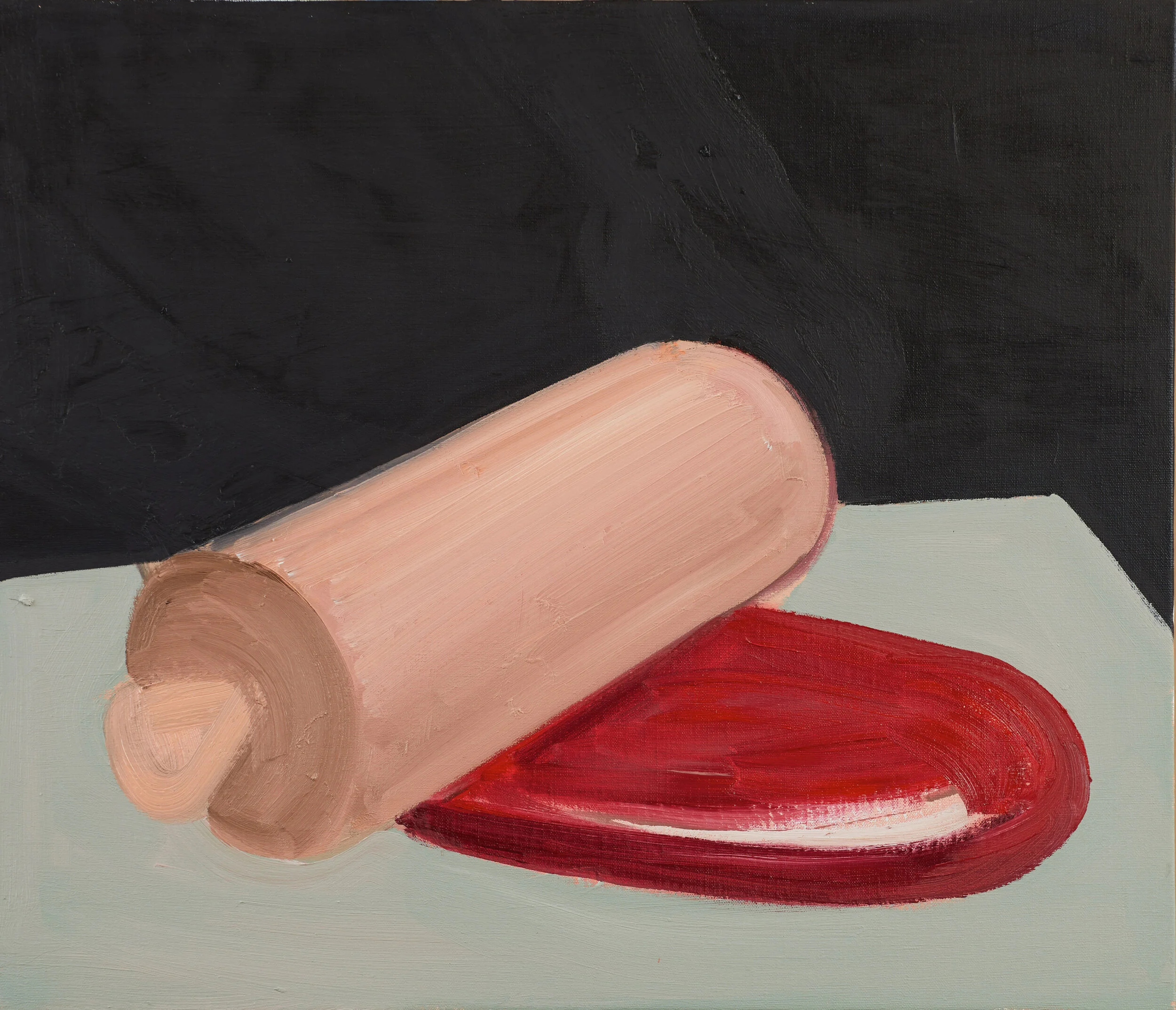
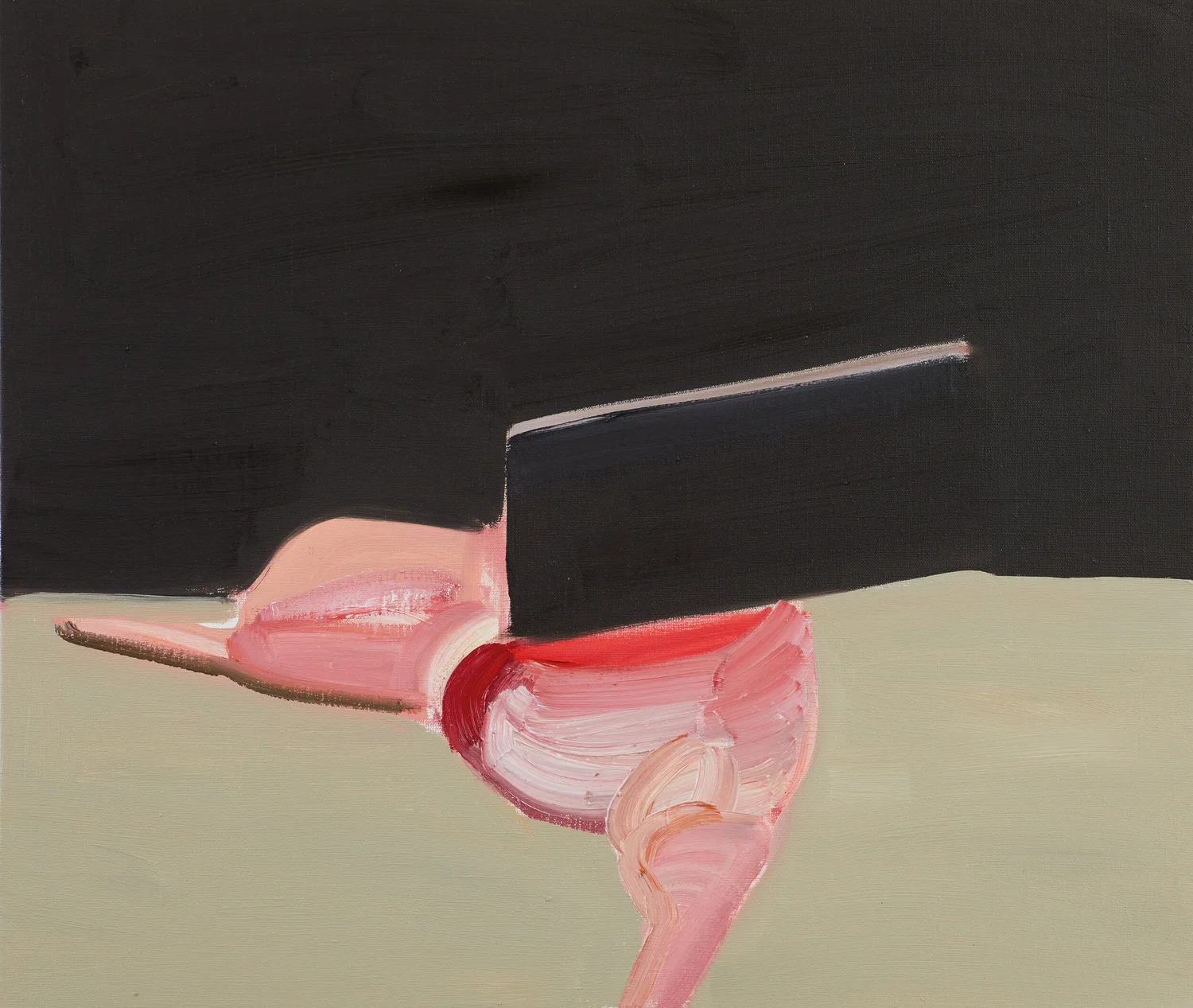
When I look at the works of Vlada Ralko from the series “Zone of Silence”, the phrase “nutrition institute” comes to mind all the time. The authorities seem to have written this cycle about values and about the kitchen, about the kitchen as a place of blood and women, about the kitchen as the core of materiality and flesh. Most likely, there was no talk of any “food institute” (and, by the way, who knows) until I saw him there. And I can't help but see that “institution” anymore. When I first heard this phrase as a child, I had no choice but one — they have to teach people how to eat. As a child, I was really worried about this question — why don't people eat? Although metaphorically such words are used from time to time. “I would eat you now, my sweetie”— might say, for example, the mother of a baby. The same vocabulary is sometimes used by lovers. There is even such a sexual perversion - the fantasy of being eaten.
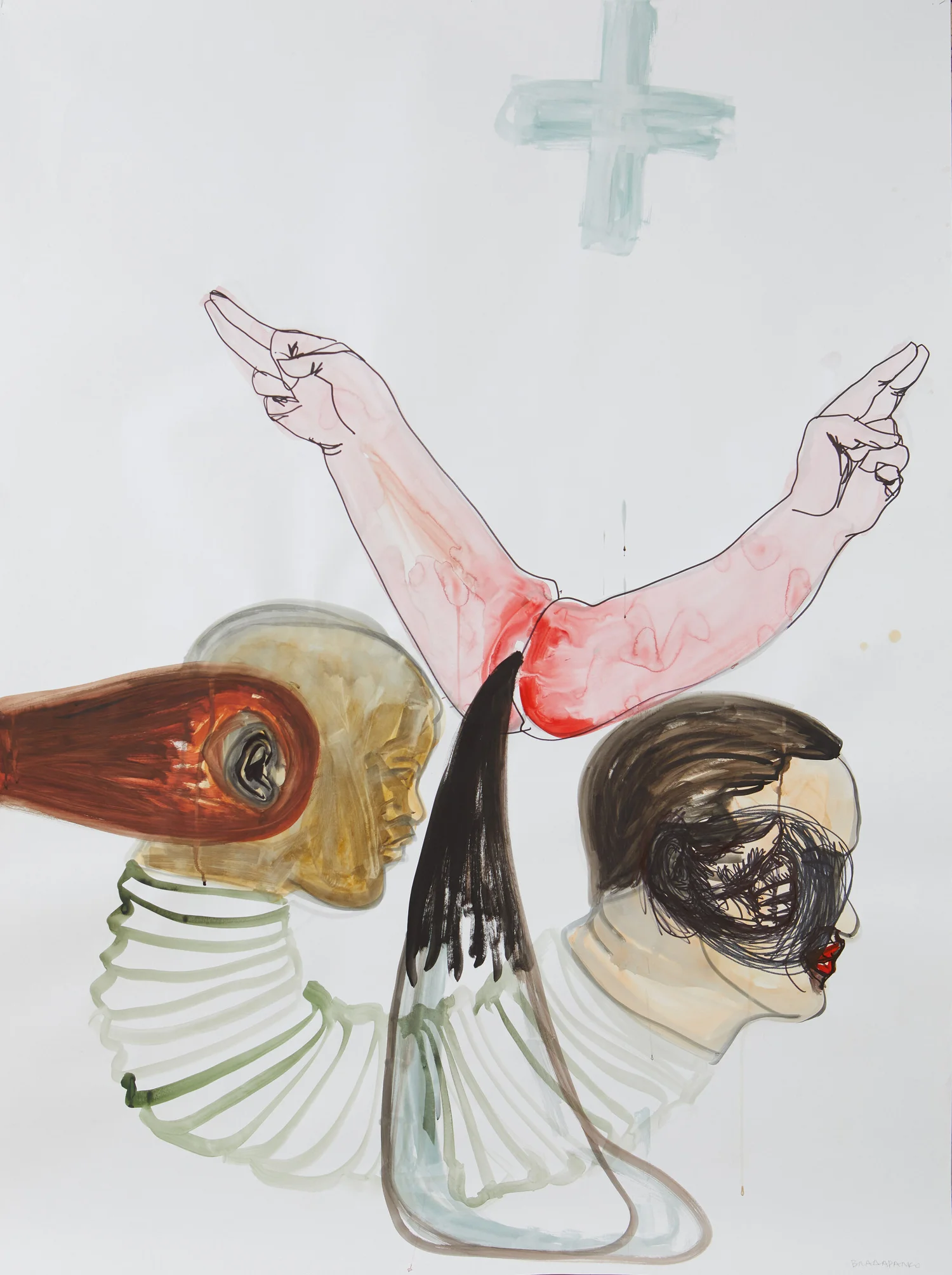
I read in books once how people ate other people on long expeditions when they ran out of food, and the survival instinct turned out to be stronger than the taboo. Much later, I learned about the Holodomor and the eating of people by humans in conditions that were organized by humans. Not natural disaster, not getting into a situation where there is no other chance of survival, but artificial hunger, which was supposed to break the will to resist, on the other hand, to ensure Soviet industrialization for the sake of the future happiness of future generations (you, as the future generation, feel It's happiness, isn't it? Fortunately, someone ate for you.)
When Alexander Menya was asked what he would not recommend eating during fasting, he answered: but eat what the soul desires, only do not eat people!
Apparently, Meng did not mean anthropophagy as the consumption of human flesh, but rather the treatment of man as an object subject to control, control, rationalization, and, as a consequence, schematization, instrumentalization, victimization.
Let's go back to the “Institute of Nutrition”. This is a real institution, which was formed in 1930 with the task of calculating food standards for the “enemies of the people” - a contingent of concentration camps, which will soon become massive. These norms were defined on the principle “not to let die, but to destroy any possibility of restoring energy.” A special role was played by the calculation of protein in the diet. That is, the practical absence of protein was the key to the impossibility of resistance.
Historical background is embarrassing notifies:
“In the early years of its existence, the main tasks of the Institute were the study of questions that meet the physiological norms of the issue for different professional and age groups of the population, The answer was made to the questions of the general public.”
Institute“at the present time there is the designation of the Federal State Budget Study of Science of the Federal Research Center for Issues, Biotechnology and Immunity of Food”. It's so simple: we developed man-eating standards for people, and now we're doing “Food Safety”, and the incomes we created and who lost their human faces are only a page of our history. (And just in case, to your knowledge, there were also similar institutions in the Ukrainian Soviet Socialist Republic.)
Public catering, “to which a great deal of attention has been paid”(as stated in the historical reference of the Institute of Nutrition), in fact, was the main way of eating. The housing, which was planned to be built in the early years of Soviet power, did not provide for the availability of a kitchen (kitchens in communal apartments, in principle, were also not adapted for cooking, in one small kitchen could not accommodate a dozen families). Everyone had to eat in public canteens and thus not be able to avoid ideological communication and resist the influence of its consequences (information that reaches a person with food is absorbed, so to speak, bypassing consciousness).

The kitchen, which later became a symbol of protest communication, conversations about politics and mutual trust in a narrow circle of friends, appeared almost only in Khrushchev. Once, as a child, I heard a joke from the owner of one house: this is how we exercise here with a piece of meat, this is how they process our souls.
It is this attitude that I see in the works of the authorities. The artist mercilessly prepares perceptions, as if warning the viewer of the need to be attentive (and perhaps even paranoid) about one's own soul, which continues to be the subject of exercises on the part of ideologues, no matter what color their flags are and no matter what symbols they use.
Warmth lulls, dampness eats into your flesh, everything becomes raw material for the production of a new (communist) man. This person is always “new”, he has no past, he is not capable of memory, and therefore, the future never comes.
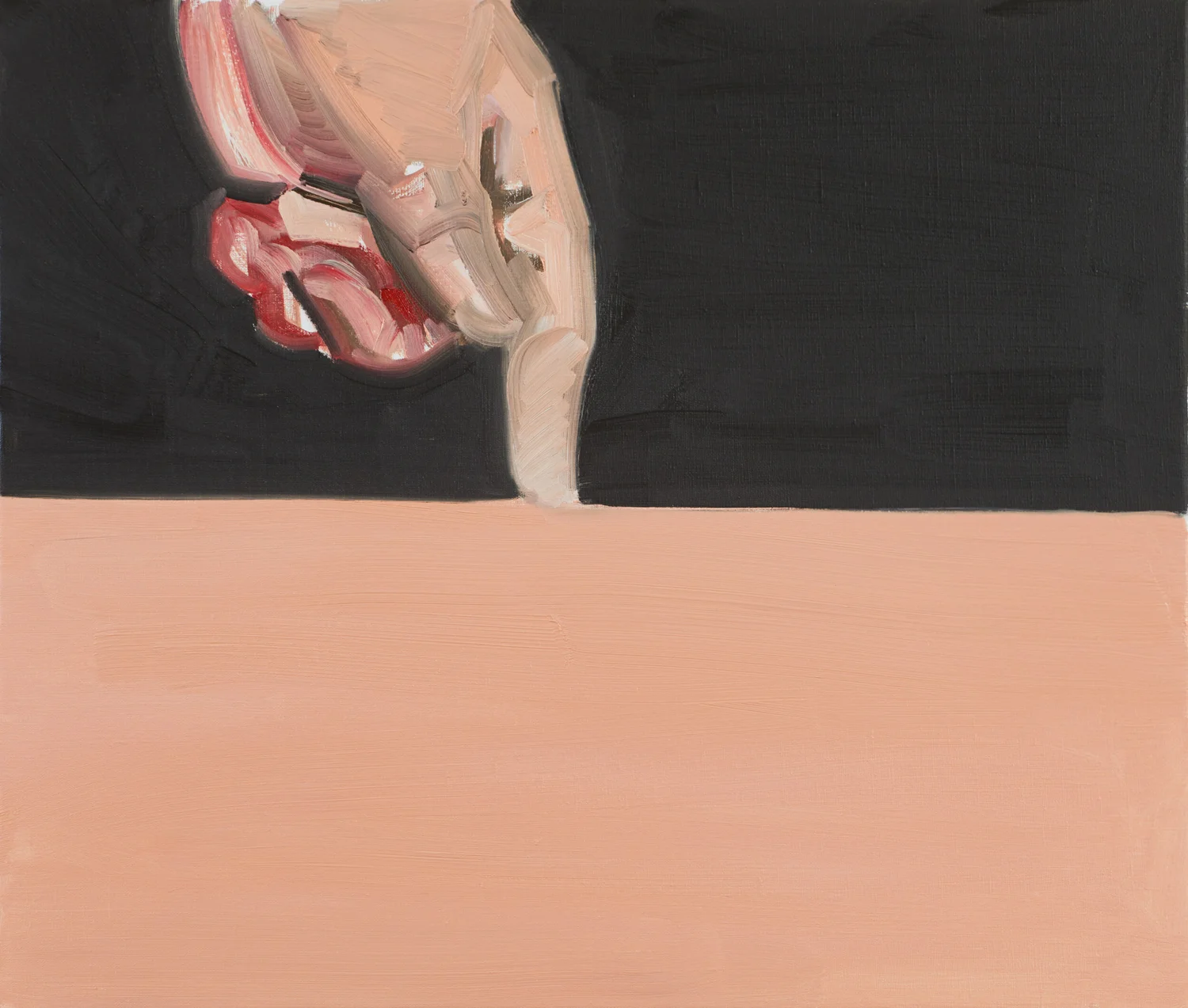
Raw people, about whom the artist tries not to think (“Attempt to forget about people”) — from the play of TL “PostUkrainian Body”. The tangle of woven bodies moves and therefore seems to be in time, but time loses its essence and becomes evil. This time, like a Mebius tape, is always upside down. The non-indicative time structure is an abstraction in which we live, but we guess that life in it is not really possible. The artist talks to us about this very impossibility.
Meat to meat, to complete indistinguishability, where the living hand ends and the dead flesh begins. The dead man seems to absorb what touches him. But in a surprising way, this reminder of death works as an act of liberation, of existential liberation from the good intentions of preserving life that, before our eyes, increasingly obviously contribute to its, life, destruction.
Fashionable vegetarianism/veganism as an attempt to avoid the thought of death (which, in fact, is the only thing that makes a person human), to forget about it is a very attractive idea. Man wants to continue his comfortable existence, enjoying the majestic beauty of his good intentions, while at the same time trying to cure depression caused by the contradiction between his own intentions and the consequences of his actions. This depression has become the value foundation of the existence of modern humanity. Depression was the response of being to a person's attempt to get rid of the thought of death and its value — to give meaning to life. Vlada Ralko in his pictorial wisdom emphasizes the interaction of life and death, does not separate them as a certain sequence in time or neighborhood in space, but accommodates them in the simultaneous existence of connected vessels.
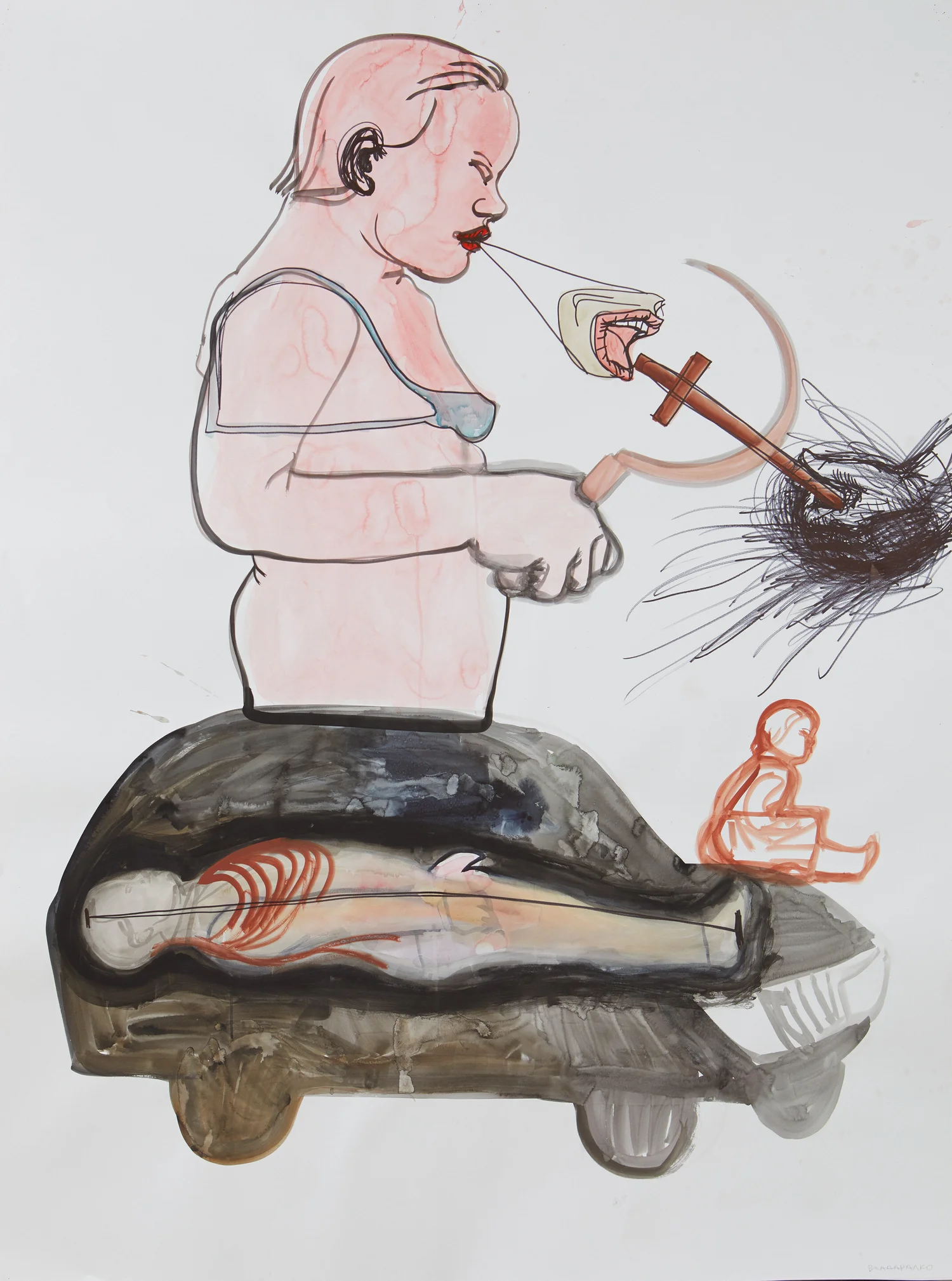
The internal and external in watercolors (with the participation of a marker) of the artist are also combined. The effect of compatibility is achieved by doubling the gap — between internal and internal, between external and external.
The inversion of spectator perception, which Vladi invariably succeeds, serves to reflect the adult, while official culture continues to cultivate an obedient subordinate being from human raw materials.
“Institute of Nutrition” remains the one that calculates the norms of protein fasting under the guise of caring for health and figure. The zone of official silence closes time and stops thoughts.
“Regulated Silence Turns to Violence.” Always.
Author of the text: Larysa Venediktova


.svg)