
6—7 September at the Künstlerhof Frohnau Open Studios 2025 — an event that traditionally takes place twice a year, in spring and autumn. Open studios allow visitors to see the artists' workshops and communicate with them directly. Vlada Ralko and Vladimir Budnikov opened their doors to the public, who presented a specially created exposition “Place for Life”. Some of the works were exhibited for the first time — in particular the series “Forest” by Budnikov and new paintings by Ralko from the series, which has no title yet.
“We live and work here as artists, but our home is Ukraine. Every moment of what is seen becomes a message about memory, reality and home. The open workshop with works from both the project in progress and from previous series is proof of the severity of time and our presence in the moment of history,” says Vlada Ralko.
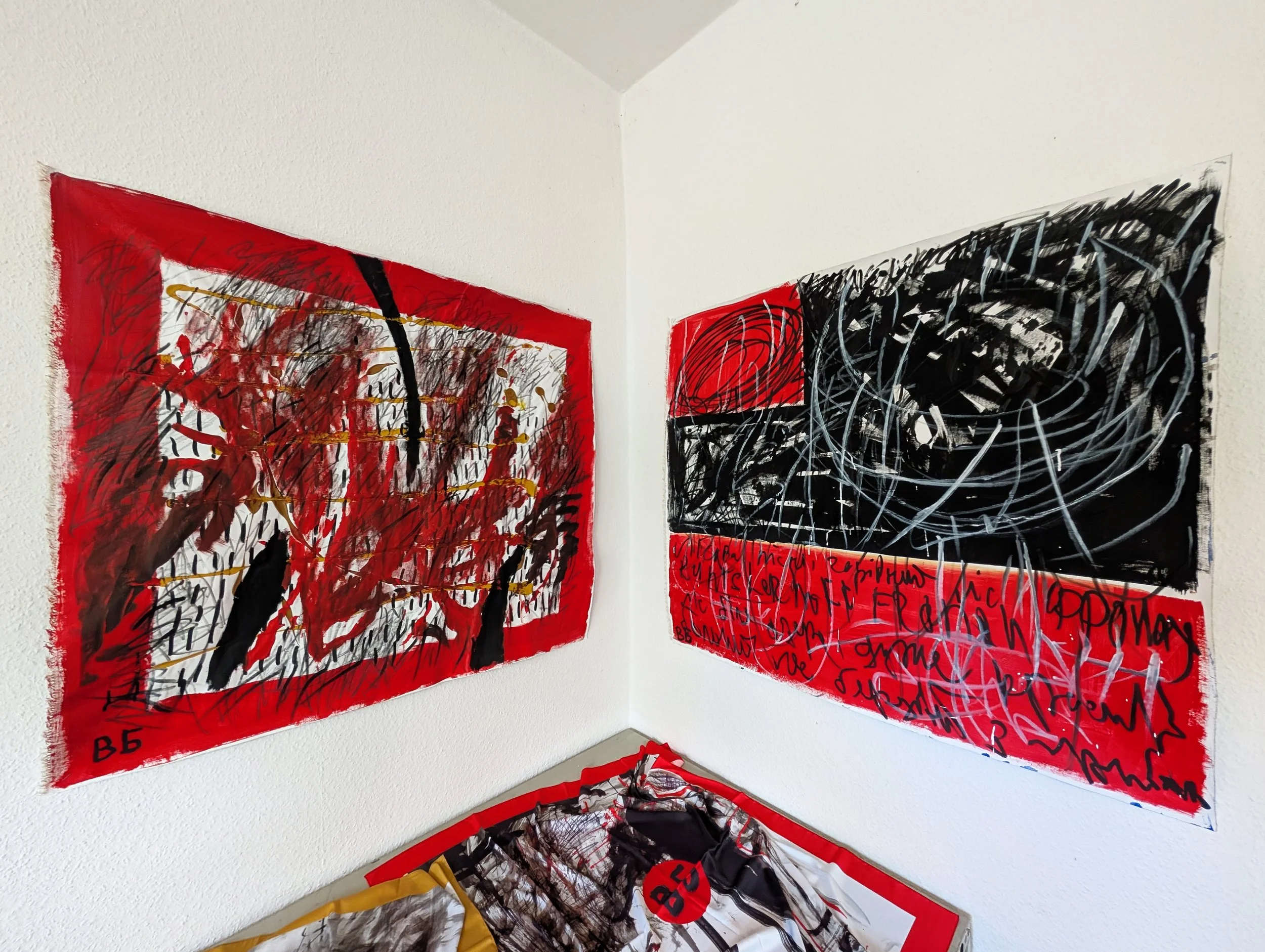
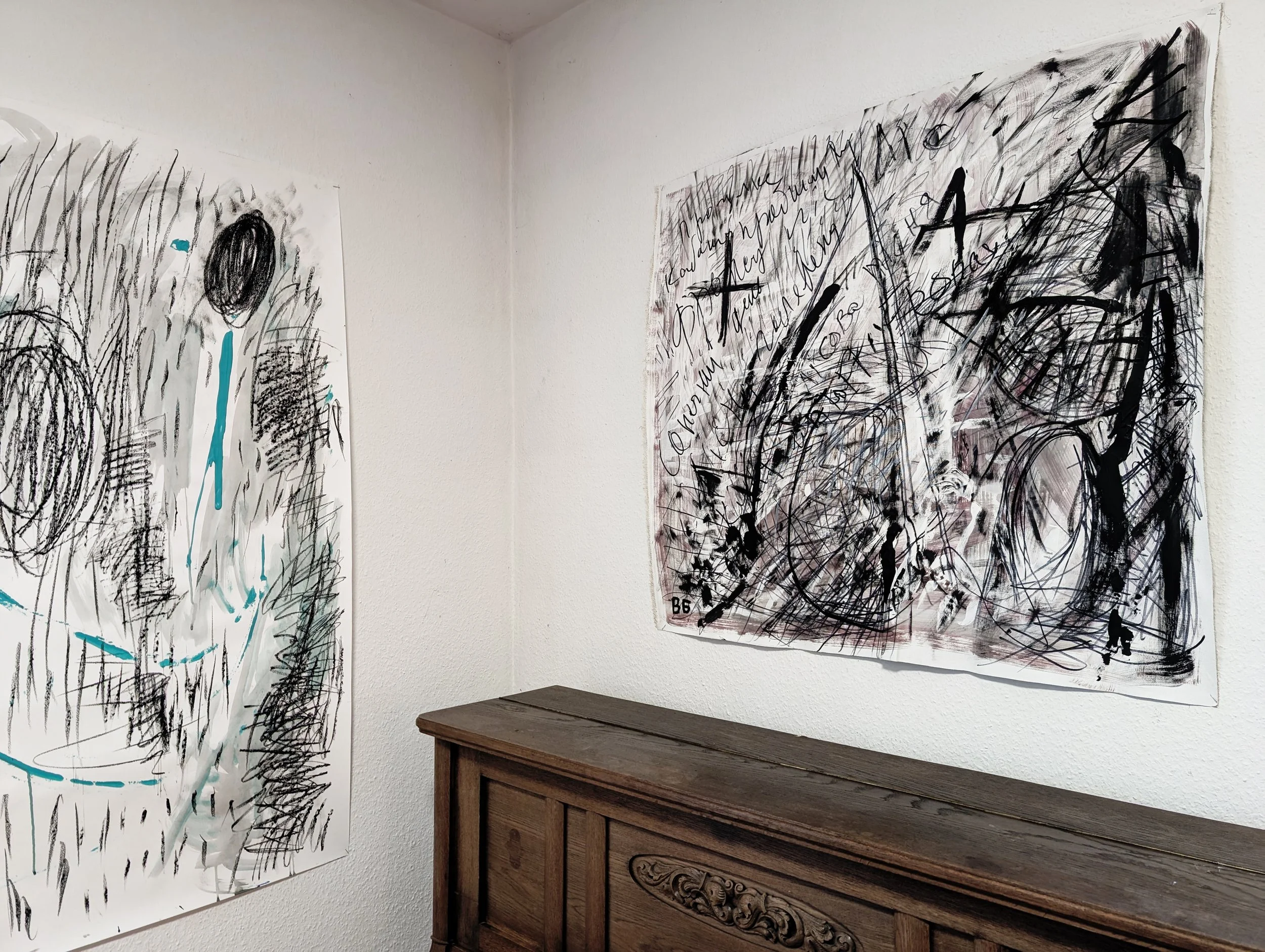
For two days, the artists' forest workshop turned into a four-room gallery space. The entrance hall introduced the audience to the works of the series “Forest” by Vladimir Budnikov. The artist further develops almost the most important theme in his own practices - the theme of landscape, this time depicting the forest as a metaphysical, multi-layered, contrasting space. On one of the works there is an ironic inscription through abstract forms: “The forest near the lake is very beautiful.”
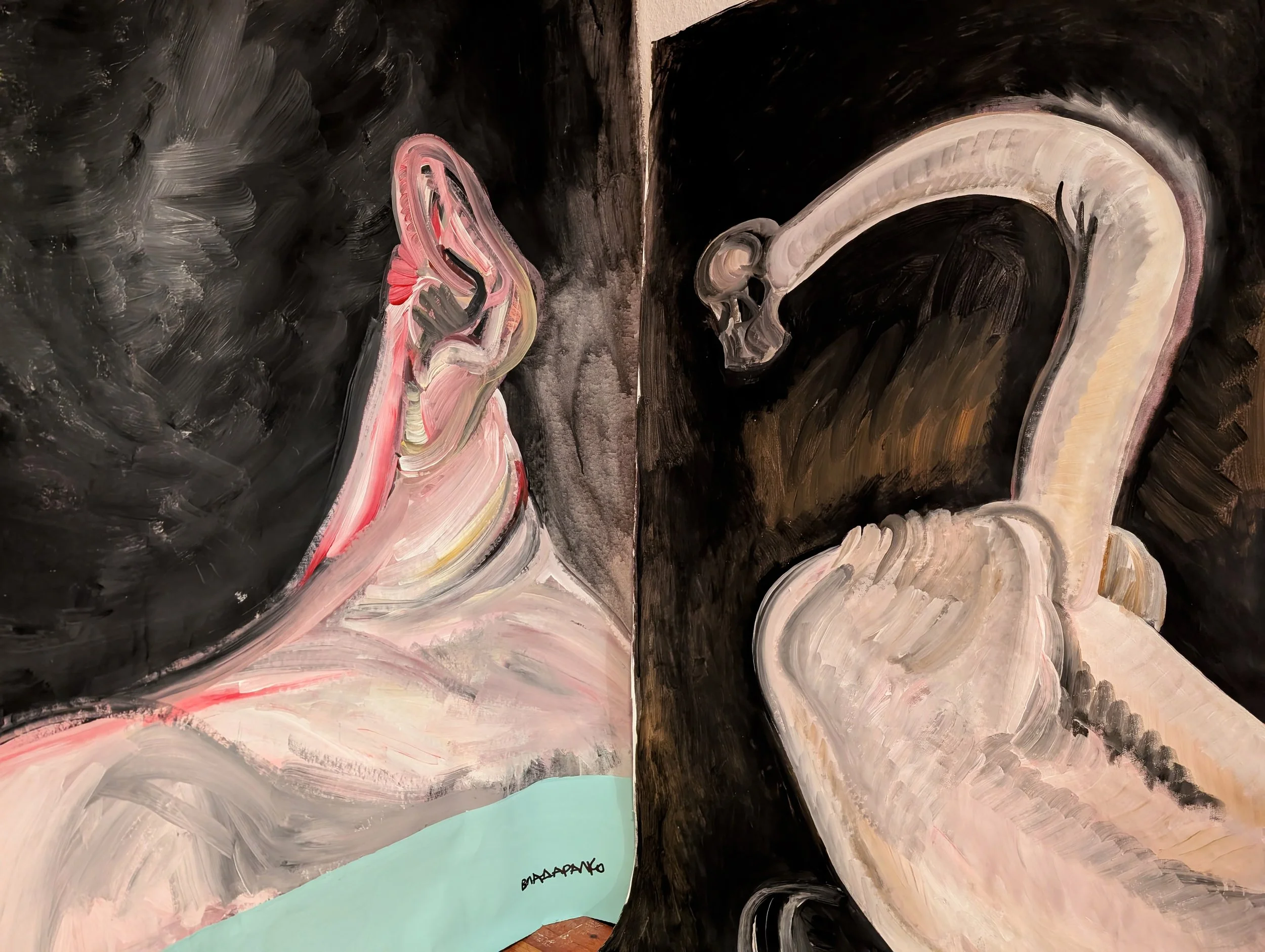
In the second hall, Budnikov's canvases were transformed into sculptural objects, similar to Japanese shōji, dividing the space of a large room. Vlada Ralko's installation “Sunday Lunch”, already known to the public thanks to previous screenings in Germany and Ukraine, was presented nearby. This time, the artist supplemented it with a thick tablecloth, from which the fur sprouts - a fragment from the series “Not My Room”. According to the artist, she performed such a “serving” for the first time. Above the table hung a picture from the artist's new series: on the canvas there is a humanoid creature - whether a person who moves on all fours and looks into the distance, as if simultaneously running away and hunting someone. This series continues and deepens Ralco's traditional motif of the corporeal grotesque and body-horor: deformed bodies, skulls, and the exploration of the boundaries between animal and human.
At the end of the hall, a painting by Vladimir Budnikov was waiting for visitors, which refers to Malevich — the canvas depicts a black square. Located in a kind of “cavern” of this space, hidden behind canvases reminiscent of Japanese shōji, the work takes on the appearance of a sacred, unattainable image. This space also houses a screen with videos based on works by Vlada Ralko from the series “Lviv Diary”, on which the artist is still working. The series already has more than a thousand graphic drawings, which have recently been published in a special edition.
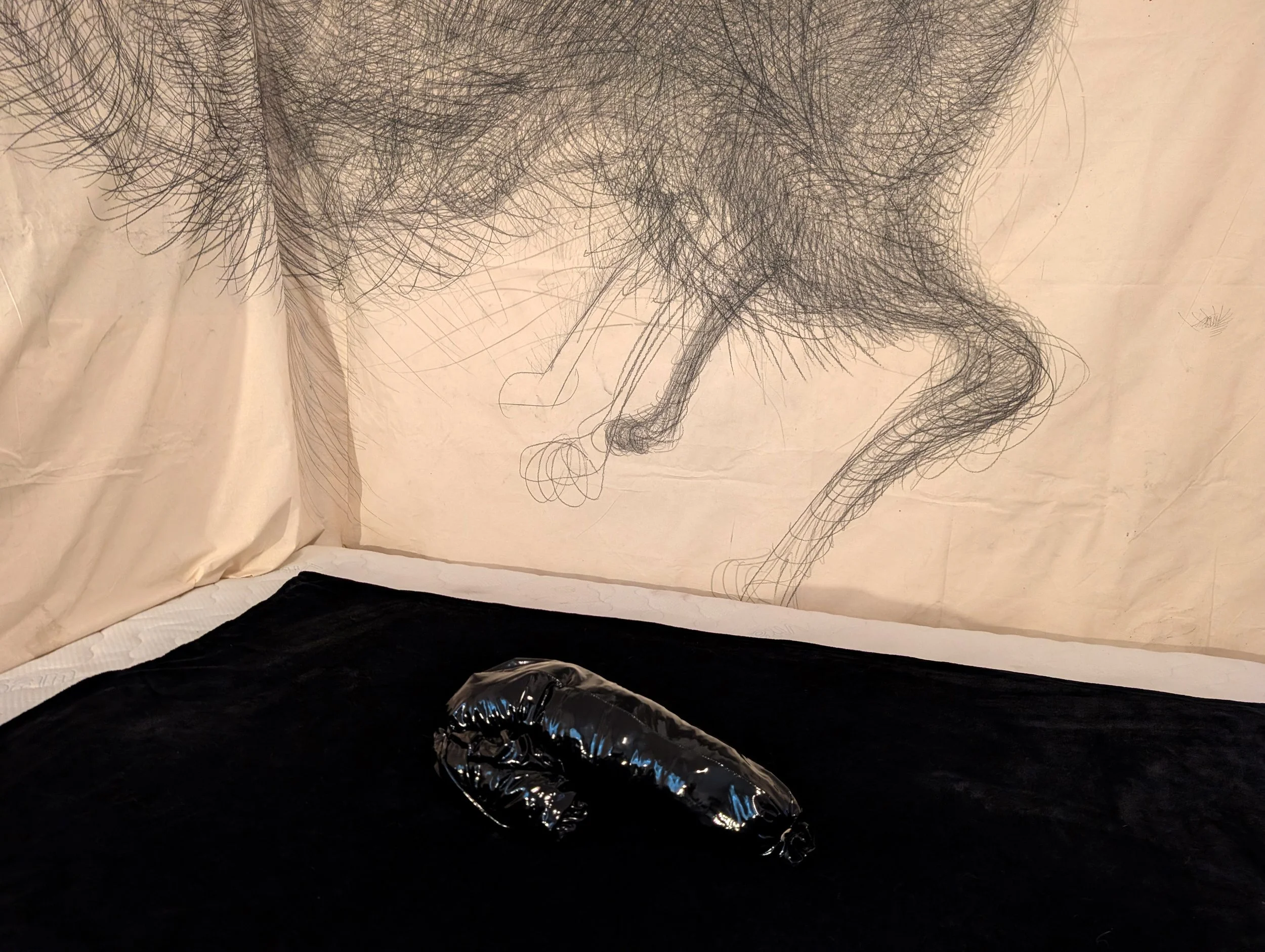
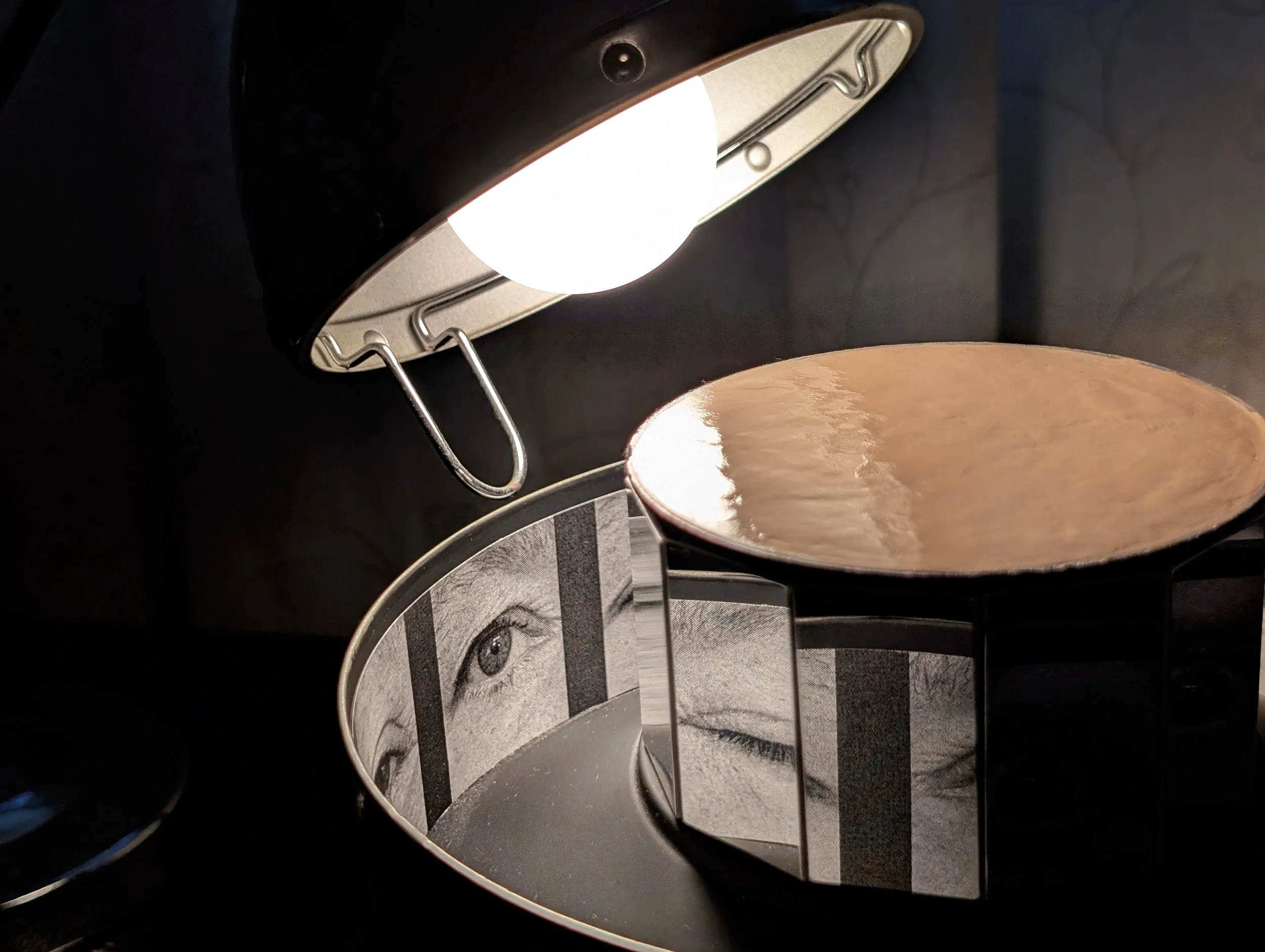
The third space is the corridor where Budnikov usually works, filled with works from the series “Forest”. Heavy, pastel canvases covered the walls, immersing the viewer in the dense materiality of the painting. Next, visitors came to a small room that serves as Vlada Ralko's workshop. Objects and drawings from the Not My Room series and the new series exhibited for the first time were presented there. The space was like a revived Ralco graphic, filled with psychologisms: a giant rat hid behind the bed, and a black phallic symbol was placed in the middle of the bed. A lamp was shining nearby — a model of kinetic sculpture with the eye of an artist watching everything. On the desktop there were quick sketches with a ballpoint pen.

The exhibition “Place for Life” within the framework of Open Studios 2025 appeared not just as a display of new and already well-known works by Vlada Ralko and Vladimir Budnikov, but as a carefully constructed multilayered narrative about memory, body, space and presence in time. She combined the intimacy of the workshop with the scale of the gallery space, creating a unique experience for visitors.
Budnikov expands the metaphysical theme of nature through the series “The Forest”, transforming the landscape into a medium of reflection and contrast. Ralko continues the study of the physical and psychological, embodying it in forms of body-goro that both frighten and attract. Together, their works form a space where the personal and historical, irony and sacredness, fragmentation and integrity enter into a complex multi-level dialogue.





.svg)