
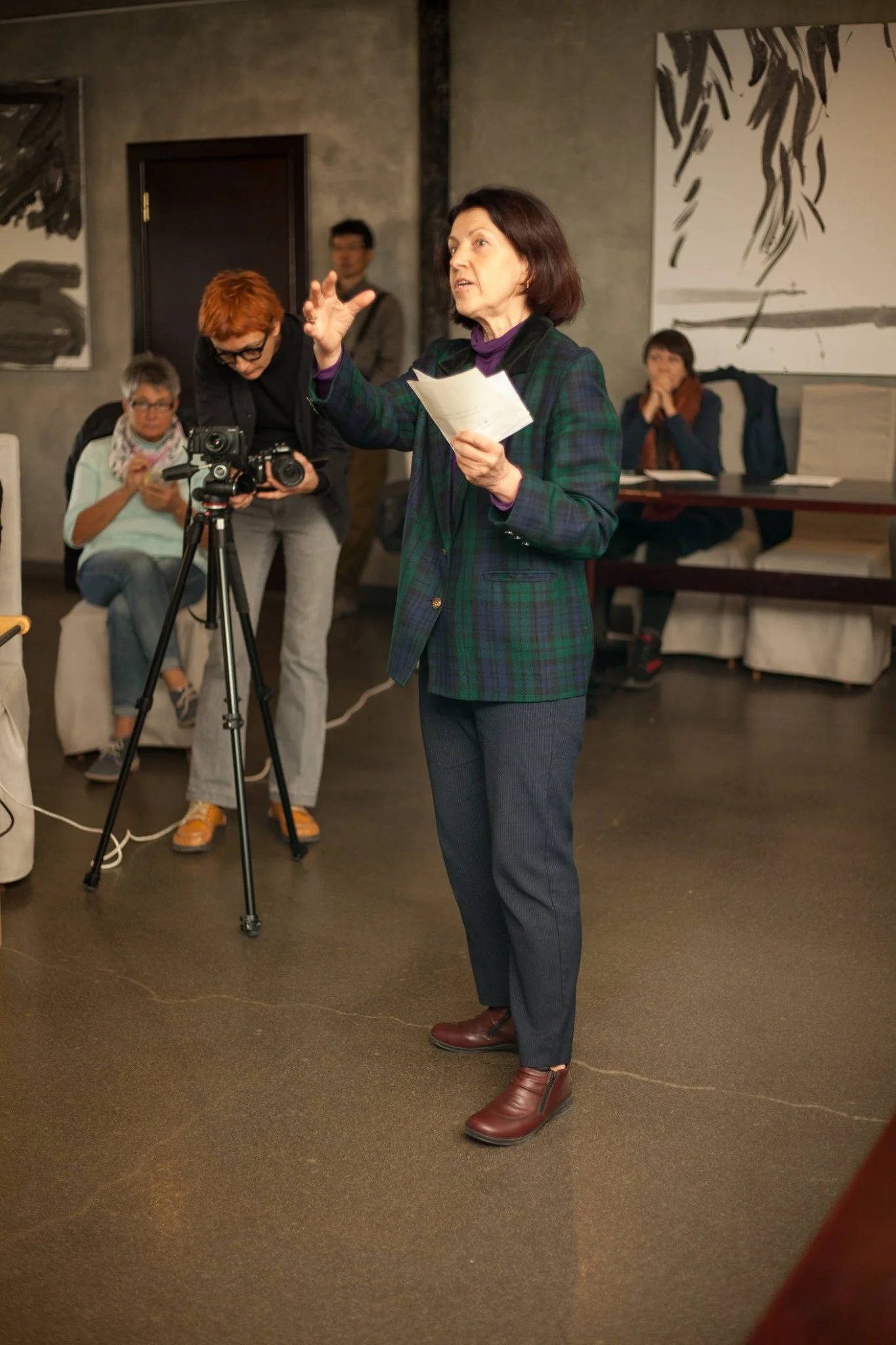
On October 28, 2021, art critic Lyudmila Lysenko passed away. She was a true friend of the Kaniv International Sculpture Symposium. In memory of this talented person, we publish her lecture within the framework of the 2019 symposium, as well as mention fragments of our conversations with Lyudmila.
Everything that can be said in the sculpture has already been said. The twentieth century was the most productive in this regard. The 21st century adds supertechnology, an incredible amount of work, but when you go back to the history of sculpture, the search for its languages by artists, you realize that we are the same people today as the sculptures of the Paleolithic or antiquity.
However, earlier sculptures were more corporeal. I mourn what heads are doing today. Jaume Plensasets such a fashion that we kind of give up our corporeality. This intelligent world of technology seems to take away the body from a person. Which we can also enjoy.
The language of the East today is connected with Western sculpture, and a new interesting language arises, where there is no man, but there is meditation, there are dreams of ascent.
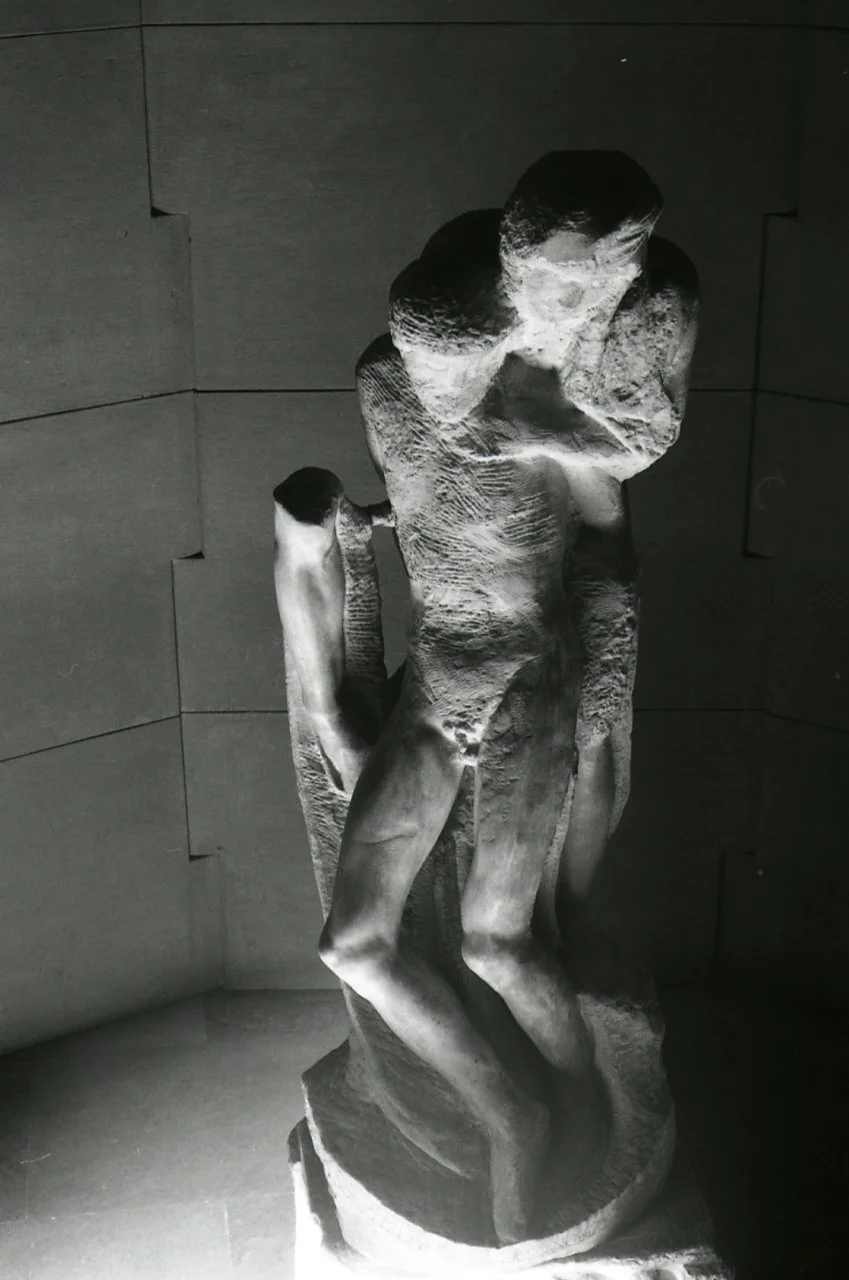
The sculpture of Michelangelo “Pieta Rondanini” ended a whole stage of sculpture. This work is unfinished, but this incompleteness was very much liked by the twentieth century, which began to write its history of sculpture from scratch.
Auguste Rodin lowered the sculpture to the ground, without a pedestal. Today the sculptures are with us — we can touch them, they stand with us. It has shortened the distance incredibly. Today, the sculptor talks about his idea in detail, simply commenting on his language — thank you Rodin for that.
Pioneers of 20th-century sculpture chose not Venus of Milos or Apollo Belvedere as a model, but the conditional concept of “primitive art”. The academic school realized that its language is not the only possible in this world.
I always say that sculpture needs to be viewed live, not in image. Your motor skills rise, your whole body turns on its perception — when it's a good sculpture. But if there are only concepts and a head...
Horribly, but in human history, militarization (geometric) leads to war, and livelihood — human life — is destroyed. Therefore, in the twentieth century there was a certain struggle between geometry and hospitality in sculpture. But today our sculptors can safely move from the geometric language to the living room, because working with stone is already a touch to nature.
For a continuation of the history of modern sculpture, see the lecture record:
Lyudmila Lysenko about the Kanevsky International Sculpture Symposium in 2019:
The artists of the Kaniv Symposium are a bit of outsiders in their countries. Such artists must be found, although it is difficult. They do not run the course, but “sink”. For example, sculptors like Anish Kapoor are like scientists, not artists. They are not artists in the sense that they are not romantics or outsiders. Everything is technological in them, and technology prevails over art.
Instead, Yuri Stashkov, the founder of RedBlack, has an ambition: even the lone stars of the world he finds should have the opportunity to create something they could never do in their own country. It is extremely important that these sculptors fall into some other environment and begin to think differently about that space.
Yes, the Soviet Union has always been an insurance policy for them, and we were not separated from it. If the sculpture becomes technological, then it will not tell all the nuances. And when it is tactile, it can open these human codes and be an interesting communication. Especially in such a cozy space as Kaniv, where you have to relax in a good sense.
“Sculpture can restrain destructive processes in man and preserve humanity, what is called by the trite word “humanism””
Kaniv is probably the genius of the place, because it reveals our tactile memory. A person arrives, and the place does something with it. Of course, you can plan everything in advance before the symposium, or you can come and decide directly on the spot. These are the miracles I expect from the symposium — not that the artist came and quickly did something according to the previous plans, but contact with the people around and the area.
It seems to me that someday a new page in the history of Ukrainian sculpture will be written in Kanev.


.svg)
_-_BEIC_6349345.jpg)