
From September 10 to October 10, 2021, the 10th anniversary Kaniv International Sculpture Symposium takes place in Kanev. This time it was attended by five authors: Ukrainians Oleksandr Dyachenko, Vasily Korchevy, Ilya Novgorodov, Vitaly Protosenia and Bulgarian Zdravko Tsvetanov Zdravkov. During the month, we will publish reviews and interviews with the sculptors, and the results of their work are invited to view from October 10. More about the Symposium read here.
Is it necessary in artistic activity to copy nature in the smallest detail, to carve out all the reliefs of man and the environment? Someone believes (and the author of this text is rather one of such skeptics) that when we scrupulously imitate an apple in a painting or sculpture without additional concepts, we get only two images of an apple, but rarely a work of art. Others tend to see in this approach the pinnacle of skill, empathy and truthfulness: only by feeling the true nature of a thing is it possible to embody it in a different material and format.
Vasyl Korchovy He treats his sculptures as mimesis — an aesthetic category in art and philosophy that refers to the purest possible imitation of nature. Qualitative imitation should convey not so much the outline of an individual object as an idea of its perfection and beauty. Korchovy reflects on his own works in approximately the same categories.
“I don't make beautiful women — I make beautiful sculptures. This is a beauty that I understand, while not inventing anything. And for me, the main source of inspiration is nature” — Vasily Korchevy
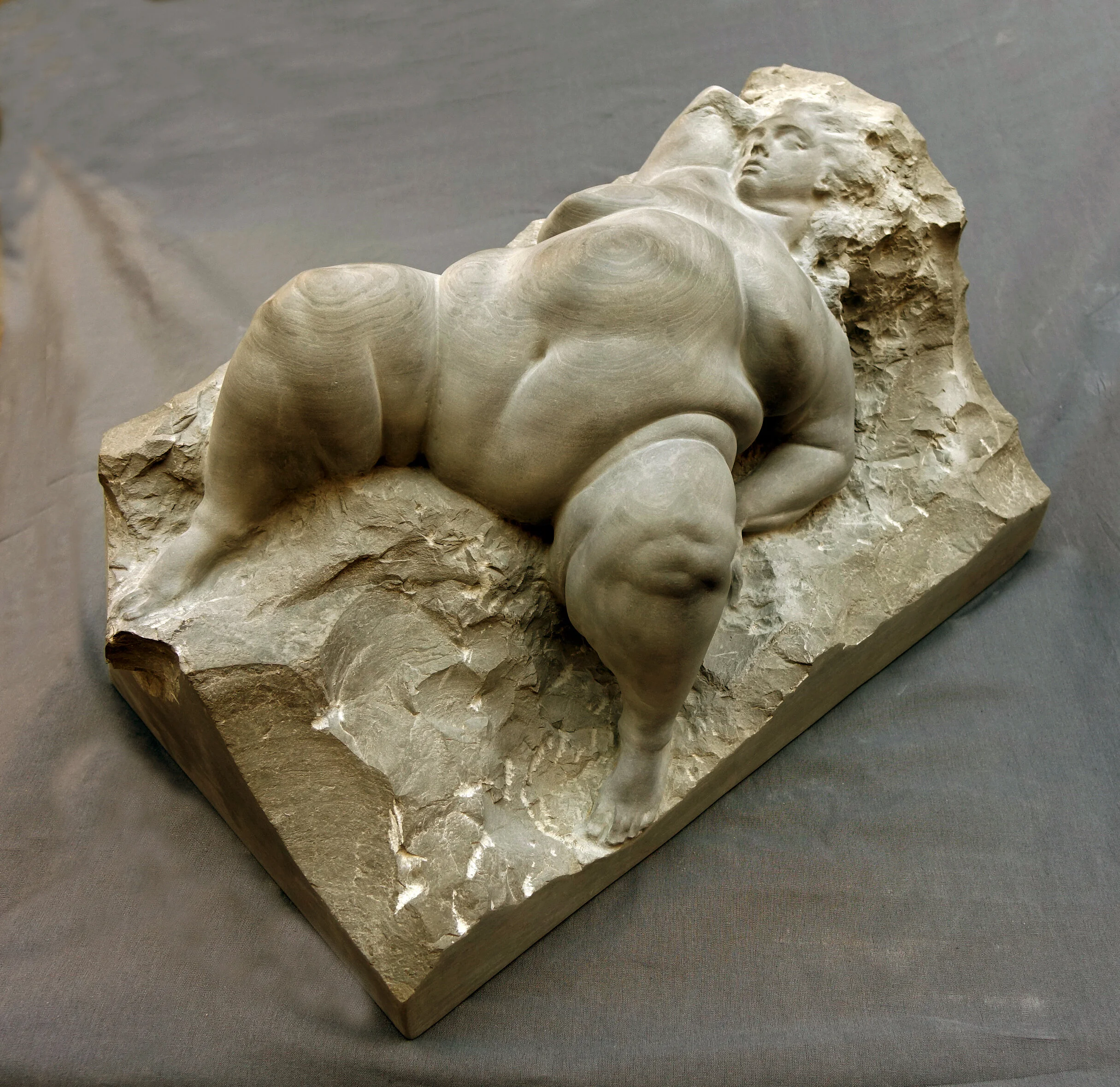
The beauty that is in question here, Korchovy also calls “Other beauty.” But its indifference is manifested in relation not to nature, but to society. Stereotypical ideas about a beautiful body in our time are various synonyms for athletic or asthenic physique. All body-positive trends of the last decade are trying to expand this spectrum, add to it as many types and features of the body as possible. About the same thing Korchovy has been doing in sculpture since the 1980s. Its models, weighing more than 100 kilograms, appear as another perfect creation of nature. Although their bodies are embossed (“Look what shapes fat creates!” - emphasizes the sculptor), they are far from critical naturalism or hyperrealism.
“Other Beauty” seeks to convey the ideal image of a woman with a lot of weight, rather than becoming an illustration to a medical reference book or a portrait of a particular person.
In these sculptures, beauty tends to be universal in relation to nature, although it is outside the “norm” in the perception of many people.
The desire to create mimetic sculpture is also evident in Vasyl Korchovy's constant references to the masters of Antiquity and Renaissance — he calls them the second source of his inspiration after nature. This fascination shows itself at first in fairly obvious things, for example, in Korchovy's thesis — the Michelangelo marble sculpture — or in his somewhat anachronistic statues of Orpheus and Eurydice at the National Philharmonic of Ukraine. But the greatest and deepest odes of excellence to the “golden age” are read precisely in “Another Beauty”. It seems as if Korčovy is conducting a dialogue with his favorite sculptors, showing that harmony can also be found in this manifestation, which they were not able to appreciate in their time.
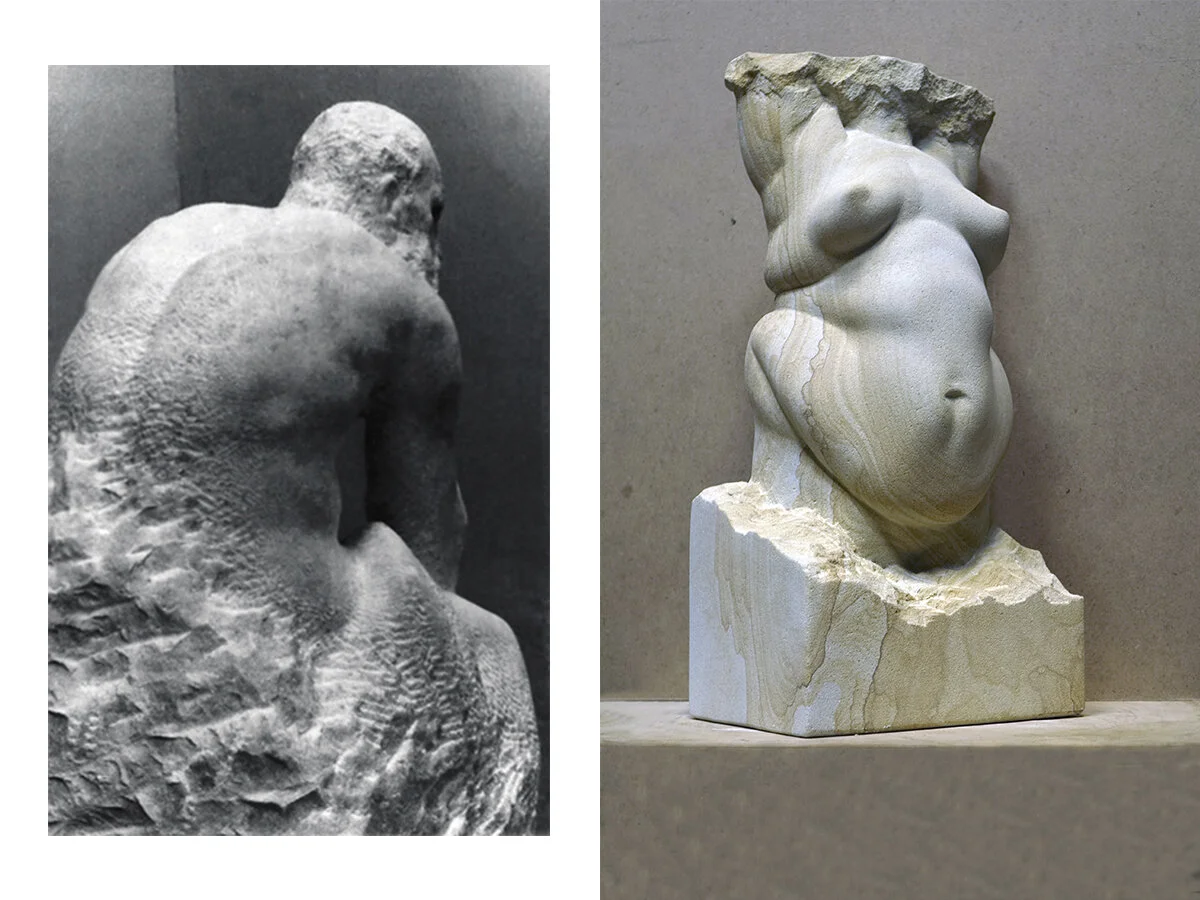
Michelangelo will not answer this anymore - but what about our contemporaries? According to Korchovy, Ukrainian sculptors and artists often react negatively to “Other Beauty”. There are reproaches in the “clogging of cultural space” or the reproduction of “ugliness” (completely opposite category to the “beautiful ideal” that is conceptually embedded in the sculptures of Korchovy). On this wave of negativity, it is obvious that it was easier for Vasily to understand the situation in which his models constantly find themselves — the same women 100+ kg. So the artist realizes not only the aesthetic but also the social value of his project — he calls it a “mission”.
The mission is to make women with relatively heavy weight also visible, to see their figures in works of art and, even more so, from the optics of a person who sincerely considers them beautiful. In this regard, you can hear the following story from Korchovy: at the same time with the exhibition “Other Beauty” (Museum of Kyiv History) in the fall of 2019, a world beauty contest for plus size women was held in Ukraine. Participants were brought to the Korchovy exhibition, where, according to their reviews, the sculptor “realized that they also suffer: even the best woman in Germany still wants to lose weight because of the insults she hears about herself”. Likewise, the artist noticed that women with full physique react emotionally to his sculptures precisely because they hardly see in culture the images with which they can (and want) to associate.
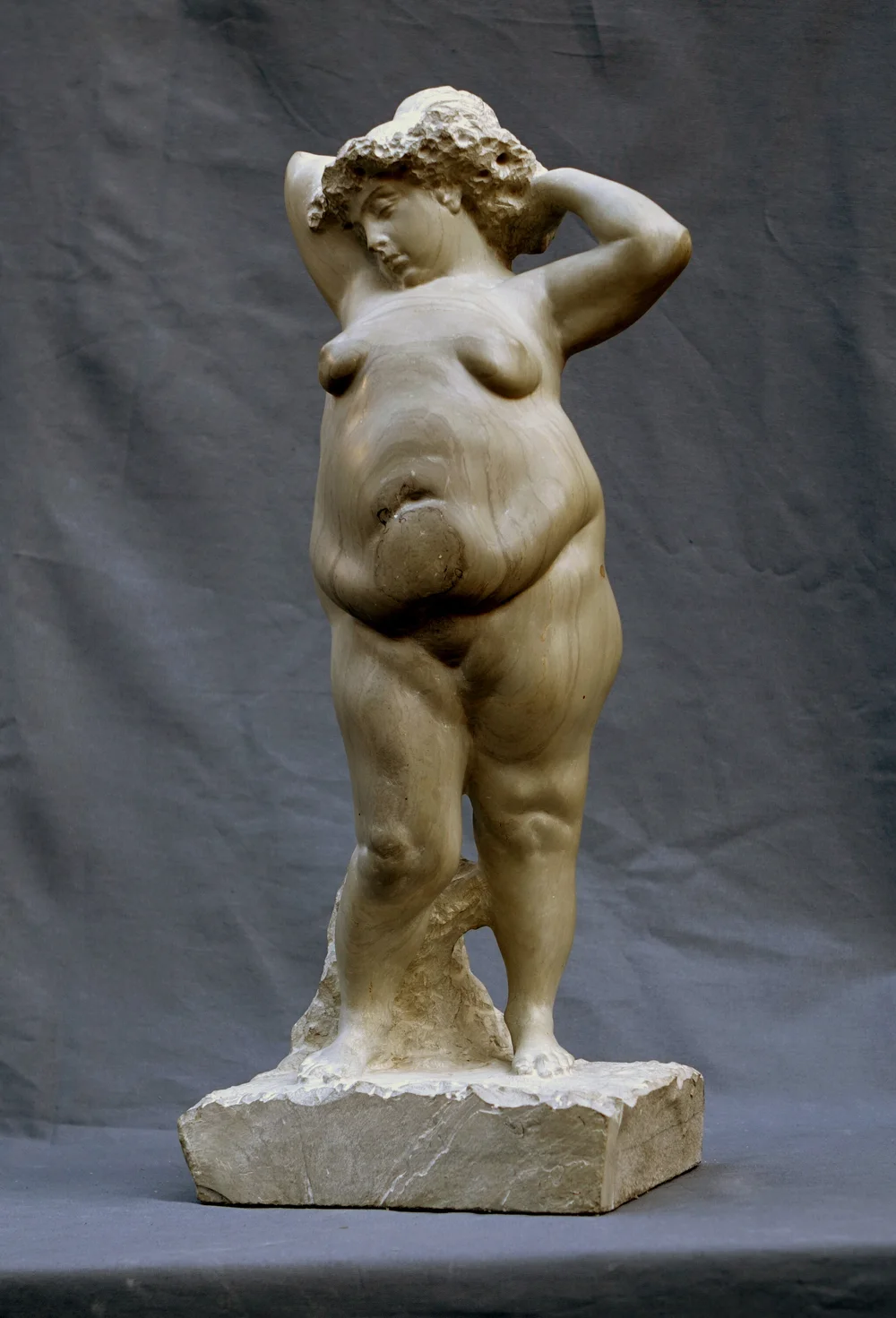
However, ethics (“social mission”) still does not play a major role in Korchovy's sculptures — this place remains firmly anchored in aesthetics. It is necessary to touch on another aspect of it, namely materiality. This materiality is important in two senses: physicality and technicality. Let's start with the first.
When an artist begins his creative path, he always focuses on something: the tasks of teachers, favorite works from museums or catalogs, art historical or philosophical concepts. For sculptors in the Soviet era, heroic and perfect bodies were an important reference point — those that glorified certain virtues and could convey the necessary ideology. The body was supposed to be realistic, but at the same time very generalized: it was a collective hero to whom the desire to be equal had to arise. Collectivity and universality are different, because the latter can be found in things that are outside the social and acceptable. And according to Soviet academic models, the sculpture had to be just right — formed from samples that visually (but not meaningfully) copied ancient and Renaissance images.
Student sculptures of women performed by Vasily Korchovy were somewhat different from modern ones: the scale and volume of bodies were somewhat closer to the norm of that time. However, even then the sculptor went beyond the canon — it is obvious that his technical perfection quickly became bogged down within the established framework of the corporeal. Working with polar categories is always much more interesting. So women began to gain weight in his sculptures, more and more folds, bulges and nuances appeared on their bodies. Whereas the experiments with male sculpture had other tendencies: the models for the Cossacks, on the contrary, were excessively thin, with clear bones and protruding spine.
Korchovy describes this feature of his sculptural work as “fullness”. Let's skip the first associations with the word “fullness”, because the artist means something else.
It is about the elasticity of the figure (the absence of unreasonable failures or, conversely, bulges) and a sense of proportion. Fullness is the standard of the same Renaissance, it becomes the main criterion for Korchovy. It is through the concept of fullness that the sculptor returns to the “golden age”, bypassing later readings of the essence of the ideal body.
“The vocation of the artist is to break stereotypes,” says Korchovy. With his “Other Beauty” he breaks prejudices both academic and social.
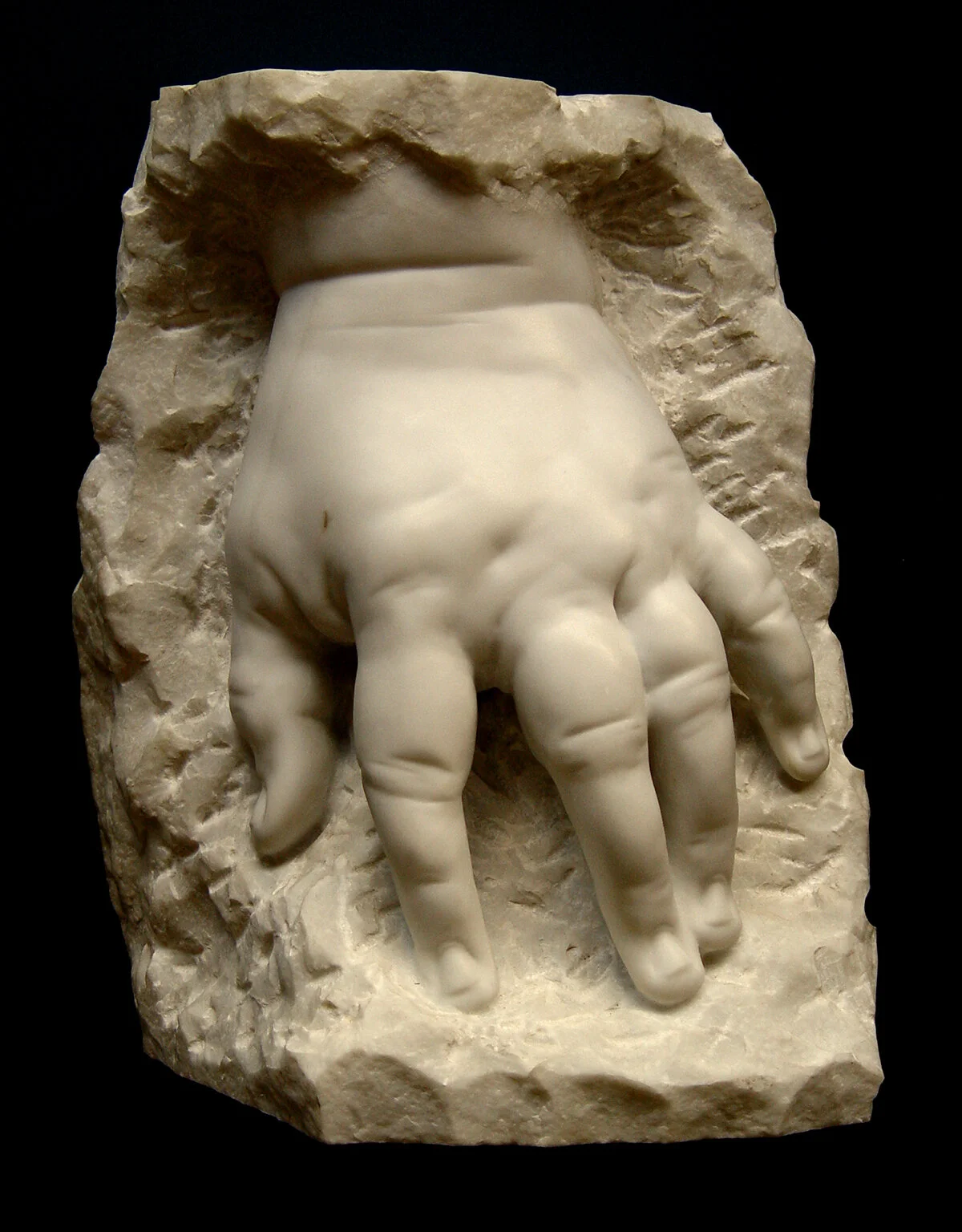
But once again it is important to emphasize: the ethical (social) mission is still in the background here. Korchovy's main tool is his extraordinary ability to work with material, to transform marble, clay or bronze into an elastic figure. The sculptor has no fear of materials and sizes, so at the 2021 Kaniv Sculpture Symposium he is going to create a woman from “Other Beauty” in his height - about 170 centimeters in height. This is a complex work (in addition to being made of gabbro), so Korchovy prepared a compact layout in advance, three times smaller than the planned original. The artist will transfer the figure clearly in coordinates, point by point. This is how he works with all large-scale sculptures.
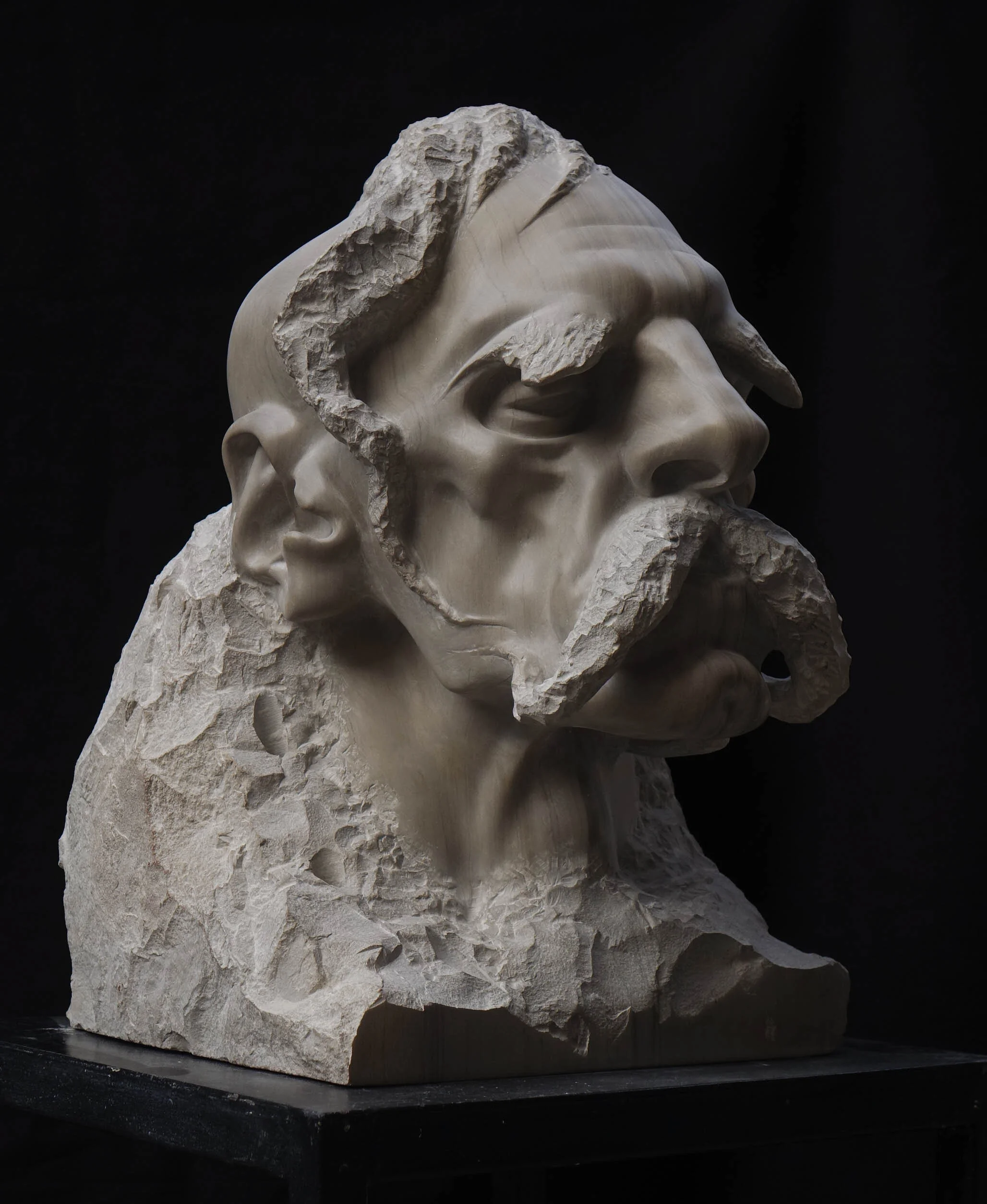
Despite the technical excellence and the truly impressive technique, Korchovy avoids portrait images. He is interested in the body, even more precisely - the corporeality. This drive for versatility, which is characteristic of classical mimesis, is especially interestingly embodied in the creation of tombstones by the sculptor. Over this part of Korchev's work, colleagues are also often ironic, but the artist himself perceives it equally with the rest of his art. At first glance, this is quite strange, because the orders, especially on the sensitive topic of honoring the deceased, involve considerable censorship and the demands of an outsider. Here Korchovy's reluctance to create portraits helps: relatives are invited not to recognize the face of the deceased, but to see his metaphorical embodiment in the stone. Communicate through sum and memory, but not by copying lost memories.
With this example, it is especially clear what mimesis is in the sculptures of Vasily Korchovy. Something that may at first strike with a hyperbolized naturalism, but in fact does not have a single prototype, the original from which they have made a copy. Rather, the imitation and embodiment in sculpture of everything that is associated, felt and lived in relation to a single object that has or once had a distinct corporeal and physical embodiment.
“Usually modern sculptors do design work. They are not so binding on the author: you can change the lines in the process. But if I miss the proportions, it will immediately be noticeable to everyone.”
Author of the text: Polina Limina


.svg)