
This question annoys artists, critics and curators, because it denies the life of an artistic work, which does not happen by itself, not by the fact of creation, but purely during interaction with the viewer. Art history, however, always brings us back to this question. At first glance, and most often in essence, it exposes the laziness of the ordinary person, who does not want to disturb either his own mind or emotions, instead of dialogue, demanding someone else's prepared explanatory puree. At the same time, traditional art history is based on searches, versions, guesses or speculations around this very question. What do drawings mean and why were drawings made in Paleolithic caves? How to interpret Sumerian, Akkadian, ancient Egyptian images? What does a flower, color, this or that object symbolize in a medieval portrait? All this may indeed be interesting, but such answers in an encounter with art will never replace the experience of individual perception. The erudite here finds himself, as everywhere else in life, a superficial loser, the one who steals from himself the immediacy of the impression, the residence of the meeting, replacing them with the shuffling of a greased log of facts.
The critic and curator are certain interpreters of art for the consumer: the viewer, the collector, the customer, the institution. However, they, like everyone, see not only what the artist wanted to say, but what he said — from the point of view of a particular era, social, political, aesthetic point of view. What they hear, they want to hear, they want others to hear, and so on. Artistic expression — as they call an artistic work or cycle today, artistic creativity is understood by everyone as speech, as text.
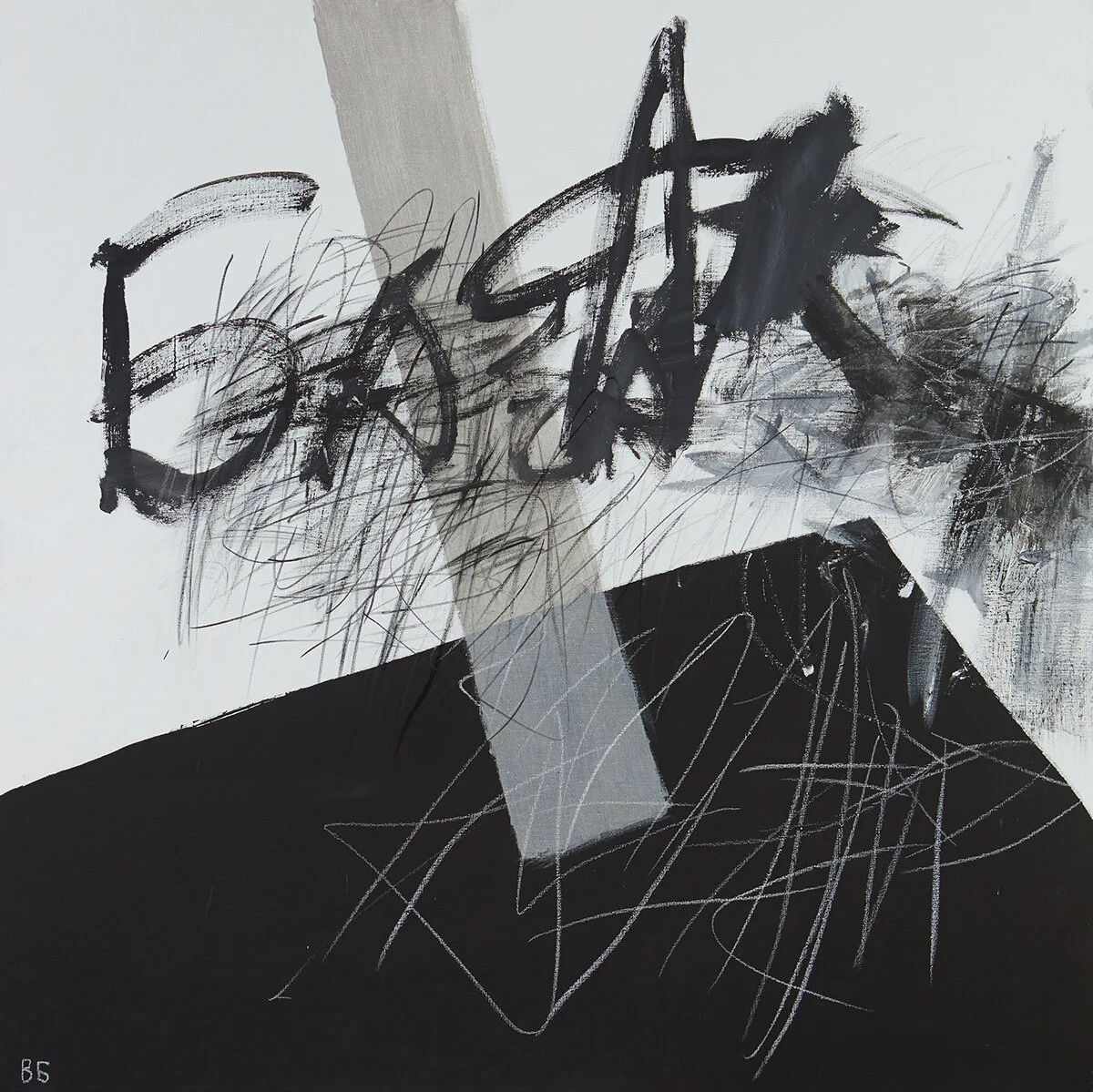
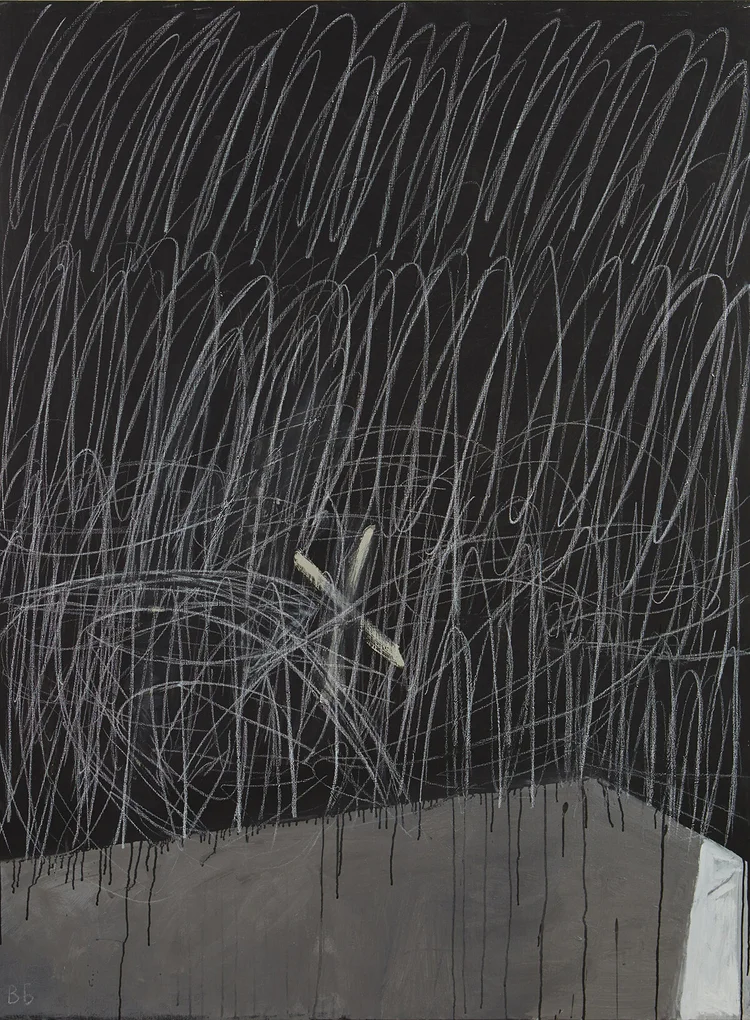
In the cycle “Inscription”, Vladimir Budnikov problematizes this perception of art, returning his view to it as a primitive humanistic activity and feature. For it is art, subsistence labor, that distinguishes man from other animals. Likewise, the inevitable reaction to art, the impossibility of ignoring it completely, is due to the inevitable reflexes of homo sapiens. Rejecting, devaluing, destroying, ridiculing certain works or directions of art, a person is forced to confess in dialogue with him.
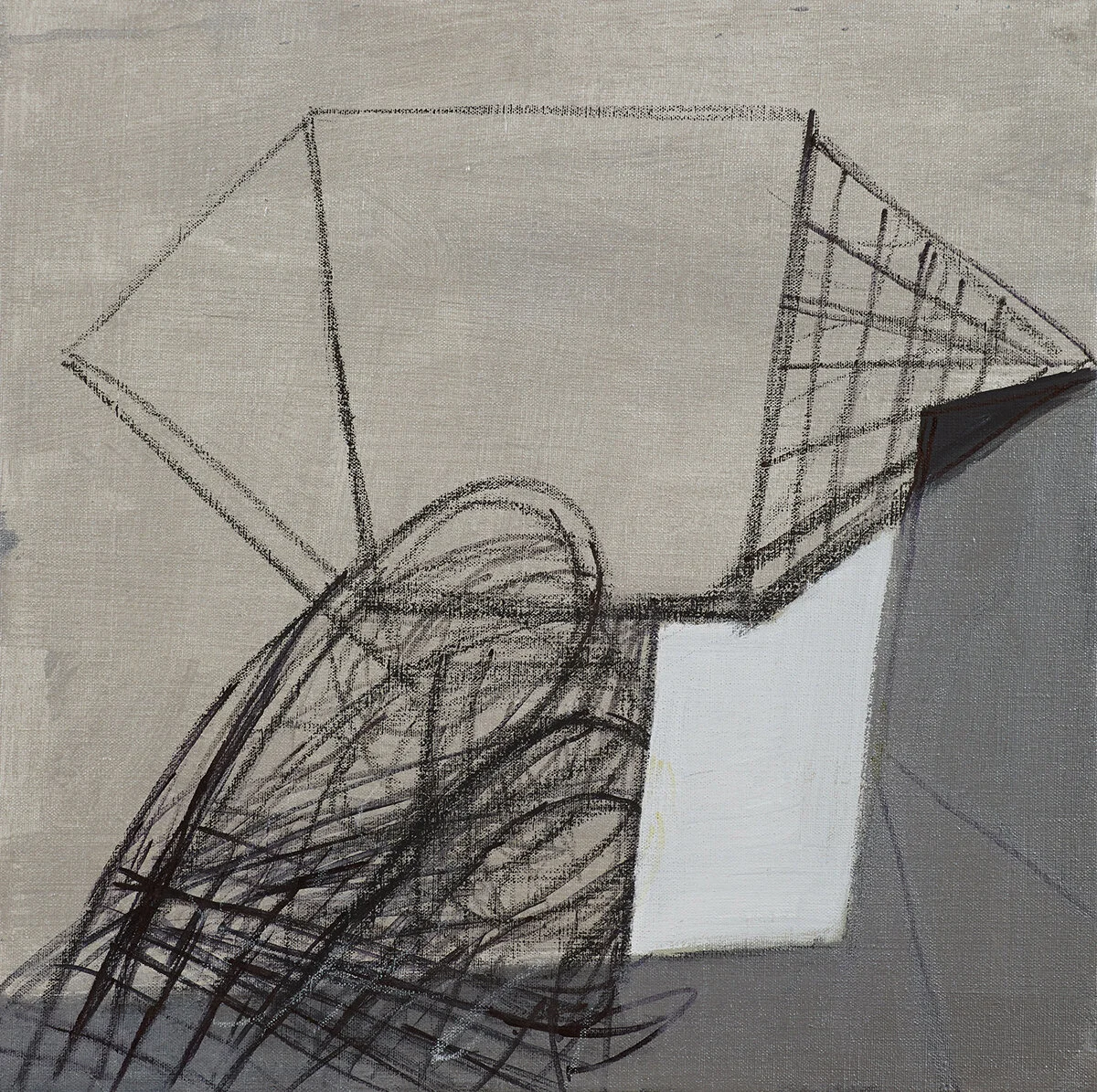
The inscription in Budnikov's canvases is realized as an abstraction, breaking the habit of seeing in it a narrative, information, and concreteness. The artist raises the very concept of language and speech to the level of a philosophical category, a multidimensional phenomenon, a living organism that changes, leaves traces, undergoes metamorphoses, sheds old skin. Displays the inscription, the word from usability. With colors symbolizing the sky, divine light and grace, he creates the iconography of language, captures its sound and meaning and captivates in the author's voluntarist canon.
Art always, despite the artist's specific intention, is in dialogue with itself, with its history, promoting human worldview and imagination ever wider and further. Budnikov's “Inscription” is like a ragged musical series of the late Stravinsky or a light show that snatches from the darkness the sharpness of images, lightning, after which only in a row appears thunder of understanding.
For example: what is graffiti? The adrenaline autograph of a vandal marking the world with its presence? Infinite, like the circle of Nietzsche's eternal return, the self-reproduction of human banality? But the ancient graffiti on the paintings of the Cathedral of St. Sofia in Kyiv — invaluable clues, clarifications about our history and culture.
By layering the inscription on the inscription, drawing schemes and calculations with the aggression or meditativeness of free lines, Budnikov creates a multidimensional space, which is human culture. This is the neo-Euclidean geometry of the palimpsest, the internal labyrinths of architecture, wall painting, incunabula, where under the newest layer you can almost always find traces of something past, previous.
“The overlay of inscriptions forms optics when it seems possible to enter what is written and move between letters, lines, formulas, and blanks” — Vladimir Budnikov
A critical view of the world is the hallmark of a humanist artist. The other, after all, is not an artist, but rather a decorator, designer of everyday life and leisure. However, the artist is not a convener of a social or political agenda. His expression is always clear, effective, influential only despite the unambiguity, straightforwardness. Budnikov's criticism is an analysis of the state of the word, expression, speech in today's world of permanent change. What does populism turn into as the dominant political reality demanded by the masses? The painting “Speech” is a convincing portrait of this reality. Bright flashes, attractive cavals fly off, shoot out like a cork from a bottle of sparkling wine, leaving the real goals and causes confused for perception, the threats and consequences of what is shouted and silent about hanging in the air.
In the works of the “Manifestation” series, the artist confronts us with a baroque sense of the cataclysm of existence. In Baroque times - as a result of a chemical reaction from the meeting of religious mysticism, the revolution of gunpowder weapons, the sprouts of the latest science and enlightenment. Today it is the effect of the information revolution, which accommodates the technological together with its hysterical rhythm. In the catastrophe, the Baroque motto, thesis, inscription, slogan captivate the masses, replace wisdom. They become a manifestation of self-sufficient effort. A phenomenon, an infectious provocation to action, choice, expression of will, movement.
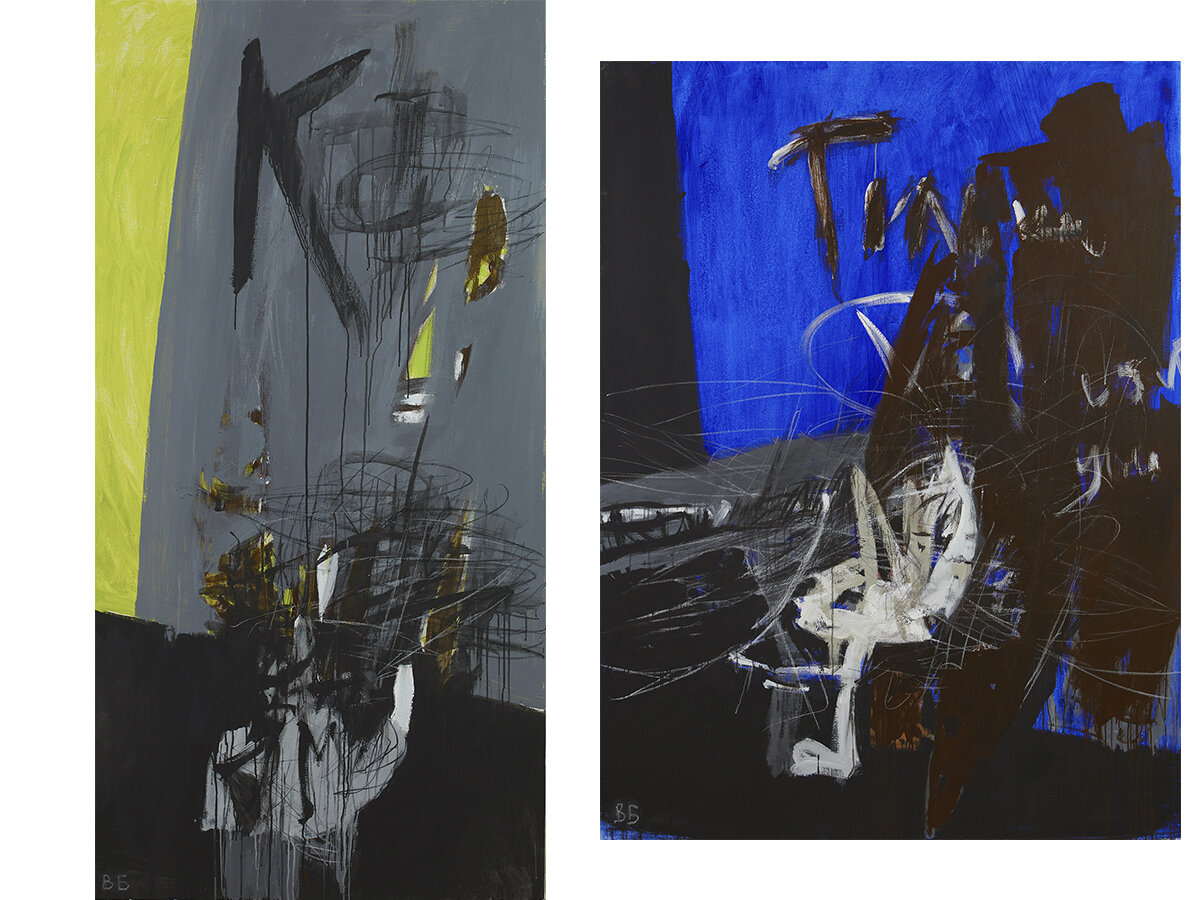
Vladimir Budnikov wonders where speech is moving as a natural property and property of humanity. Are the words we read on professional and social media really a message or already a noise? And how many messages are now really specially produced noise, clogging up the space of reflection, the space of thought, the space of the human in man? What will happen to our writing? Because the degradation of classical education, its inevitable metamorphosis in the world of digital technology and information networks, leads to people losing elementary knowledge of grammar. This does not prevent them from speaking out on any occasion in posts and comments, incessantly and senselessly spawning them on social networks - because they have the itch to prove their own existence by fixing it through the inscription.
Through painting, image, picture, Budnikov also shows us the reality in which the picture, the visual totally replaces the word. He himself has a fun experience of this kind of communication — corresponding with his granddaughter on the messenger using emojis, which allows them to understand each other without a single word, not even a letter. However, such a transformation can lead to a state where our descendants will be unable to read and understand the inscriptions on the graves of their own ancestors. This was the case with the Turkic and Caucasian peoples, to whom the Soviet authorities rewrote their national languages in Cyrillic, eradicating the Arabic captive common in their cultures.
Budnikov's “Inscription” is an open system. It offers a spectrum of understanding, prediction, perception. The author's statement of the position of art, society, language, writing is not a verdict, not a rebus and not a diagnosis.
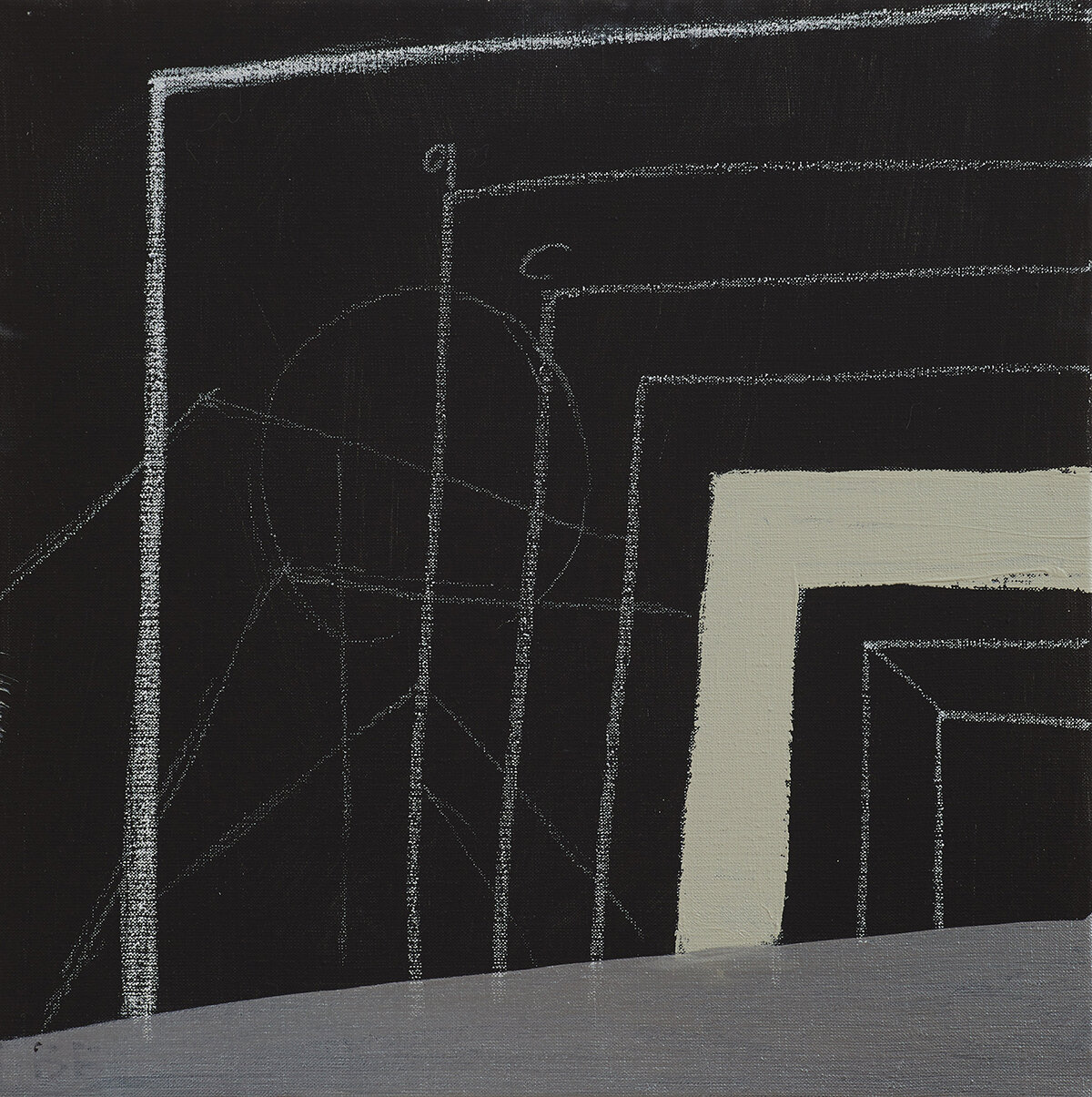
Abstract drawings of Budnikov, according to his admission, “by their very appearance they deny what is perceived as “right.” That is, it was interesting for me to observe how each touch or movement of the brush becomes an inscription that may not illuminate something else, but become light itself. In this case, my inscriptions are independent and integral, unlike the descriptions that are conditioned by their subjects”. It is also striking that the small square works that make up the “Inscription” together with the large-scale canvases are at the same time separate works and can be combined into a common composition, where they appear something like fragments of a broken chandelier, each of which reflects its own integrity, its own picture of the surrounding.
Budnikov emphasizes freedom of interpretation, returning art to the right to life through co-creation with the one who perceives, ignoring the question “What did the artist want to say?” The work of an artist is not to say, but to speak. To encourage the other to work to hear, to live, to think and, perhaps, to say something to oneself. Or the world.
Author of the text: Konstantin Doroshenko


.svg)