
Within the framework of the X Kanev International Sculpture Symposium, a competition for art critics was held for the first time. Its goal is to promote the emergence and development of art critics and art critics interested in sculpture and spatial art in the public space. According to the results of the jury's evaluation, the third place in the Competition took Natasha Nagayevska. We publish the winner's text.
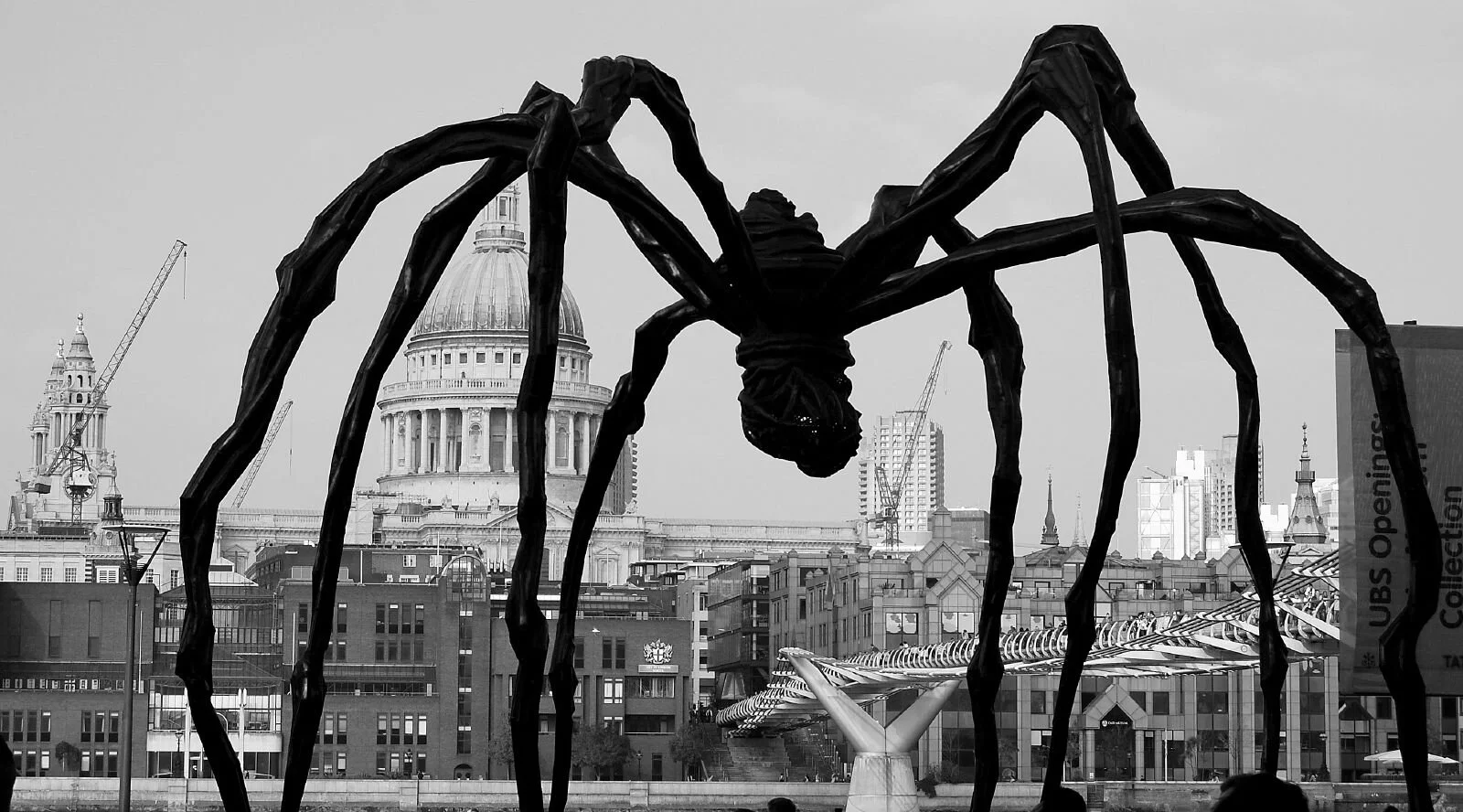
Compared to the exhibition space of gallery and museum institutions, the public space is not sterile, and the sculpture in it is an object that its audience is looking for. He looks for it in front of the building of the National Gallery of Canada (“Mama” by Louise Bourgeois), in the Sculpture Garden of Minneapolis (“Spoons Bridge with Cherry” of the Oldenburg Class), in the Dallas Mall NorthPark(“122 Women” by Minerva Kordero), on the territory of the Norwegian College (“Migration and Architecture” by Knut Osdam), on the Odessa beach of Lanzheron (“House of the Sun” by Mikhail Reva), on the Kaniv bank of the Dnieper (“Women's Head” by Alexander Dyachenko), between trees PARK3020in Lviv region (“Memento Mori” by Masha Kulikovska).
The intrusion into the routine of ordinary citizens of public sculpture must be built in an appropriate coordinate system. Therefore, this text appeared - as a test for the strength of criticism of public and sculptural practices.
If we agree with Martin Heidegger and recognize sculpture as “the bodily embodiment of places which, each time they discover and preserve their area, gather around themselves a free space, which allows things to be realized in it and man to dwell among things” [1], then we must consider in advance: publish Spaces usually do not like to tell stories about themselves, they do not tolerate interference and are watchful of contemporary art. Public spaces — spaces are sealed. It is possible to conquer or adapt to their introverted character only by forming the appropriate conditions for dialogue or confrontation, correctly placing social, spatial and aesthetic accents. Similar possibilities and power are possessed by art, that is, an artistic object interpreted as a platform open to everyone. Sculpture as a three-dimensional reincarnation of lost (forgotten, elusive, non-existent) vocabulary has a tendency to transform the space for which it is created, in which it exists and within which its transgression takes place. The unwillingness of the public to be reinterpreted in a new way, to be remade by relevance or supplemented, to become a zone of dialogue, research and analysis leads to local artistic and cultural genocide.
In the matter of the release of sculpture outside its usual cultural and institutional “parish” into the public domain, the artist, curator and customer are in a hyperactive area of responsibility, one of which is to adequately and qualitatively integrate the sculptural object into the public space (sometimes hostile and skeptical, aggressive, depressive, commercial-oriented, and indifferent).
Because “urban space is a product of conflict” [2] in view of “the absence of an absolute social basis” [2] and “its creation as a result of socio-economic conflicts” [2] and political versions, the construction of a democratic dialogue of space with sculpture, sculpture with the viewer, the viewer with the whole The public card system becomes a dilemma. Conflicting at its core, public space often claims to be an area of democratic dialogue, but (even more often) does not pull. Public sculpture is a symbolic intrusion into a sealed space, the distribution of loud and not very slaps, a way to revisit painful moments of relevance or history.In revealing the spatial and artistic potential of the sculpture and the space around it, support from the customer and adequate care on the part of the curator are always expected.
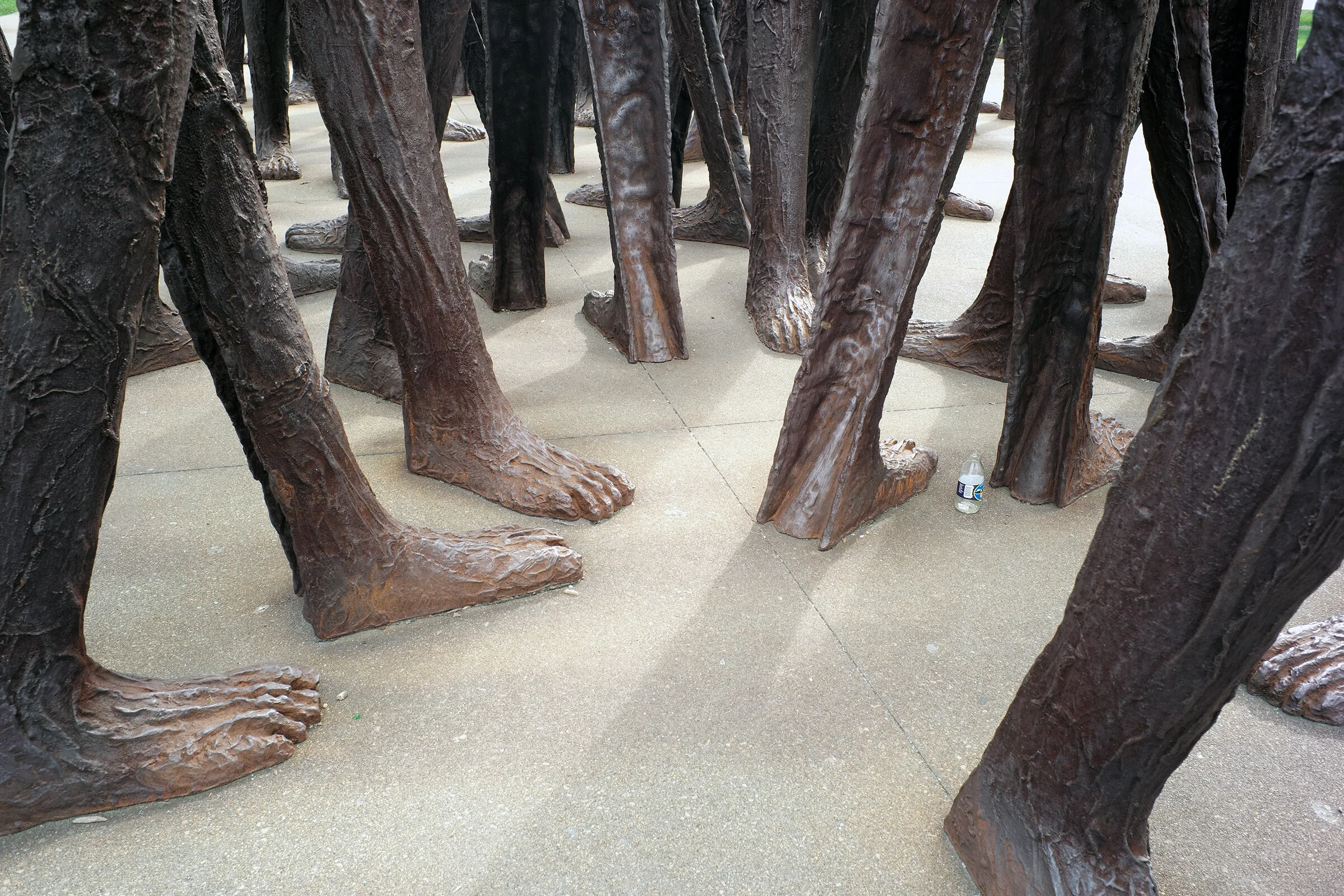
In order for the invasion to take place professionally and successfully justified, it becomes necessary to consult with architects and urbanists (as was done, for example, in the case of Magdalena Abakanovich's sculptural installation “Agora” in Chicago's Grant Park in 2008 or “Support” by Lorenz Quinn at Ca'Regsagsago O Hotel in the framework of the 58th Venice Biennale in 2019). Specialists of the public, above all urban, space know it by touch, which, for its part, can help the sculptural object appropriately emphasize the coordinates of the place and integrate into the architectural integrity without violating it, without degrading the values of both and with the possibility of both being in adequate cooperation with each other.
In working with public space, space itself should be considered not as a result of the process of social accumulation (i.e. passive mass), but as a social subject. Participants of the artistic process must take into account the already formed links of the urban body, its silhouette, features of architectural and urban traditions and practices. After all, public sculpture should speak of place and be for the place in which it exists. Its purpose is space and society, its function is to establish socio-spatial relations. And, therefore, the implementation of “homework”: the study of a specific public space, the analysis of conditions and forms of social life, the orientation to the solution of conflicting issues of the place and the planning of tactics aimed at the gradual use of the project in the environment is a vital process.
Still, when sculptural objects are created, the collective “we” of space is regularly ignored, the character and profile of the public place are discarded to the margins, it is forgotten that space is the result of articulation practice — the practice of defining meanings. Turning again to the work of the Polish sculptor Magdalena Abakanovic, I can not help but emphasize her professionalism in creating “perfect”, in terms of tasks and goals, sculptures for public spaces. At the same time, it retains its recognizable formal-conceptual texture of thinking and leading leitmotifs of creativity (“The Space of Immobilized Beings” on the hill at the City Museum of Contemporary Art in Hiroshima, where the form of 40 bronze objects, their conceptual load and compositional relationship on one side formedthe ultra-delicate membrane of memory of the events of August 6, 1945, on the other hand, continued the sculptural series “Shoulders”, originally made of burlap in the 1970s).
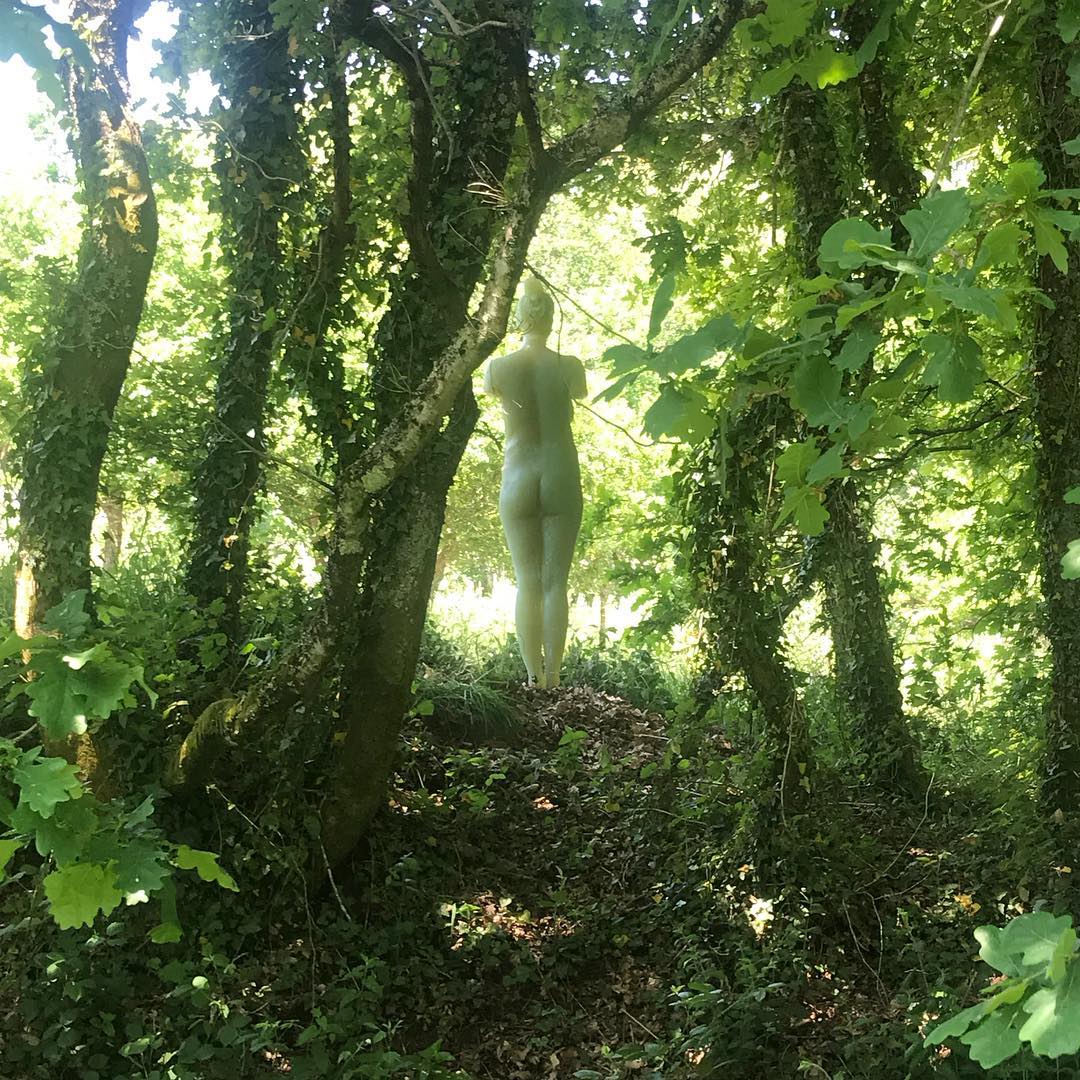
A similar example of sculpture with a rather dense backround base in a very interesting combination with the specificity of space was Masha Kulikowski's “Mermaid” as a proposal for installation on the coast of Sycomb (Wallace, England). The missing raw materials that previously provided the profit of this port city, together with the abandoned capitalist dream, received as a metaphor a performative sculpture, which in a few years completely changes its appearance, thereby emphasizing the variability and ephemeral greatness of brevity. The soap shell of the pilaster would eventually wash away, leaving behind a sculpture-replica of the artist's body made of epoxy resin. Wallace as a former center for the development of soap making and its specific weather conditions came into contact with the materials with which the sculptor constantly works and which helped to emphasize the conceptual component of the sculptural project. Public space must be the starting point for the conceptual and formal idea of public sculpture. Therefore, an artist who works with sculpture for a socially concentrated space must take into account the fact that such a sculptural object must be flexible, timely, sensitive to change and, if necessary, able to adapt.
The “cultural precariat” is calm to the artistic, apathetic to interpretations. He is uncertain, often unaware, he is characterized by the vitamin deficiency of modern art. A mass audience is an audience that may even be unfamiliar with art and architecture, do not know the words “installation” and “remake,” do not understand why a steel arch is conceptual, and a speck-covered inflatable pumpkin is a portrait of an artistic alter ego. The “cultural precariat” moves through the city in asthenic silence. A “sudden” sculptural object is not the only way to delay it, slow down, invite to dialogue.
Public sculpture is a specific entrance to the territory of contemporary art. Mass “vaccination” by modern art must be delicate: the method of working with the viewer is built into a carefully thought-out, analytically reconceived construction of the conversation. The task of the curator is to create formats and modes in which the meeting of sculpture and social space will be as effective as possible. For his part, the customer must be prepared for artistic variability, certain social contexts and must bear in mind that, unlike advertising, propaganda and any other information flow, an art object in the public space is aimed at social change and these changes will try to occur through a rational, non-violent consensus. Establishing these paths is primarily within the competence of the artist himself, so one of the basic tasks is to change the museum-gallery hierarchy “artist-sculpture-spectator” to the mass-public “spectator-sculpture-artist”. Sculpture should be addressed to the collective and establish ties with it. After all, it is a way of transformation/regulation/eradication of deformed or absent sociocultural relationships and filling the “sterile chambers” of visual experience.
“The public card comes through the back door like a second-rate citizen. Instead of lamenting this, he can use his marginal position and speak on behalf of marginal cultures, presenting himself as the bearer of a special point of view, of the opposition party.” Since the early 1990s, when Vito Akonchi's “Public Space in Free Time” was first published, there has been the problem of supporting alternatives. The involvement of informal, experimental-oriented artists is an additional opportunity for the curator to reorganize the public space, and for the customer to go beyond the tightly constructed framework of “safe”. Today it is important, even more so — strategically necessary — to enable artists to realize even the most controversive, multifaceted, non-obvious in future reactions, conflict-debatable, even utopian ideas.
As long as experimental and daring and risky projects remain unsupported, sculpture in the public space will be the story of “one artist”. The public space is a cross-art laboratory, a meeting place of alternatives, where the shadows of experiments and experiments are outlined in bold strokes of future artistic routes. The only question is whether they will not be left to rust until “more appropriate” and “out of season”.
Often in the diet of public space “suddenly” kitsch, absolutely mercantile things appear. Who is responsible for such taste (s) effects and the reproduction of an obscene odor that mows (or worse, does not mow) under art? Questions of the artistic and aesthetic value of sculpture bother me: the external precedes the internal, the taste multiplies, the artistic is in a state of permanent starvation. Aesthetically myopic sculptural objects are increasingly filling spatio-cultural vacuums in the desire to show that “something is happening.” Even worse is when aesthetic dimensions are reduced to political gestures.
Without a doubt: on a rather conflicted map of art, there are no territories in which it does not intersect with politics. But when demagogy starts metastasis in the ultra-thin vulnerable matter of modern sculpture, the level of development of painful neoplasms increases, which can only be eliminated by acute-reaction interventions. When the political triumphs over the aesthetic, when the political conquers the aesthetic and passes off “all-inclusive” poetics as personal artistic expression, and the plausible for the truthful - the public space is filled with falsifications of the current artistic state, which distort perceptions of the modern, shift focus and disguise are valid.
Given the specific feature of public sculpture to become a kind of symbol of space, it hurts to say, especially to look at the so-called CowParade(which, by the way, is positioned as the largest and most successful “public art event” in the world), on the kitsch parasites of Jenny Leonar or the bronze Vinnytsia musicians of Vyacheslav Posternak, on the next animalistic meaninglessness, mass portrait academisms, bronze butaphors with the smell of the Soviet Union, until now idealized, politicized and commercialized conventions.
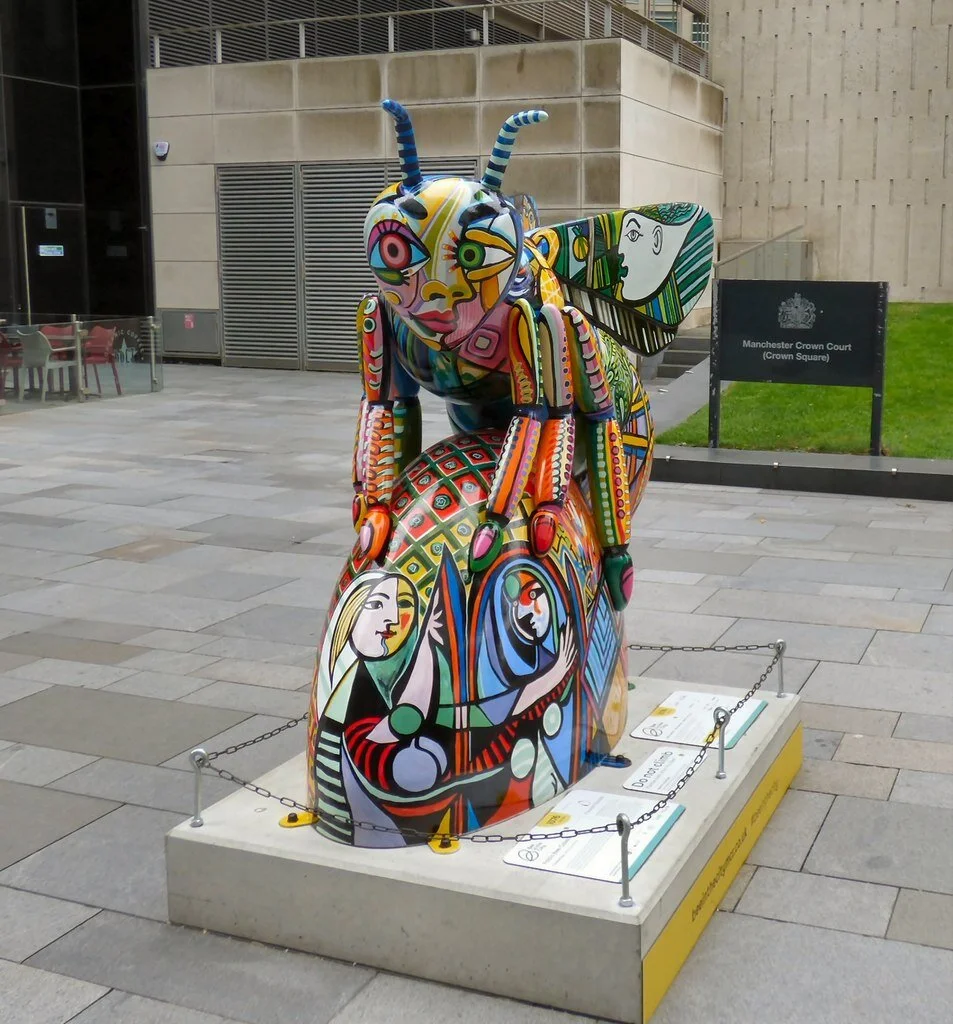
Public sculpture as a component of a system that forms the boundaries between spatial/temporal and visible/invisible realizes its dominant role in the visual load of a place, but does not always move along successful diagonals. Its aesthetic trajectory is constantly shifting: customers are actively assigning art tools to solve their own problems, resulting in an “interesting” decorative design. Under such glutinous conditions, the social and spatio-artistic tasks of sculpture created for the public space end where the vaccanalia of preferences and unspoken censorship began.
For the mentally healthy atmosphere when creating a sculpture for a public space, I recently had to observe at the Kanev International Sculpture Symposium. Artists who create works for the sculpture park on the territory of “Knyazhoy Hora” in Kaniv call the work process within the framework of the sculpture symposium pleasant, because the organizer — the association “KrasneChorne” — gives them freedom in creative decisions, does not disturb the process of work by advisory invasions by creating all the necessary conditions for a completely consistent mutual understanding of sculptors with their works, with the space around, with the harmony of the place in general. My experience this year of observing the work process of sculptors in the framework of the symposium gave a clear understanding that the ideal conditions for creating a sculpture for a public space are absolute trust in the artist, minimized by the presence of edits or customer's wishes and curatorial care within the framework of organizational issues.
The conditions of creation, the goals, the relationship between the participants in the process, the setting of tasks and the search for solutions — all this does not affect the nature of the sculpture's existence in the public space without a trace. Therefore, as long as curators promote “profitable”, claustrophobically limited and unscrupulously copy-pasty sculptural projects, as long as artists offer comfortable and inert solutions with attention to the wishes of the customer, as long as customers do not distinguish advertising from social and artistic, until they change the basic principles of the study of space and its social, appropriate tasks will not be set, adequate or completely new methods of working with sculpture in the public space will not be chosen — until it is filled with plausible objects, a surrogate, decorative-quotable ersatz-art, the art of the one percent, until the agony of hope struggles with the main goal of public sculpture — to make visible what is invisible.
[1] Martin Heidegger, Art and Space//Bytie and Time, Moscow 1993, p. 315.
[2] Rosalyn Deutsche, Evictions, Art and Spatial Politics, The MIT Press, Cambridge, Massachusetts and London, 1996, pp. 278.
[3] Vito Acconci, Public Space in a Private Time, “Critical Inquiry”, vol. 16, №4, summer 1990, art. 918.


.svg)
