
Three winners of this year's Art Critics Competition from the “KrasneChorne” art association Khrystyna Semerin, Natalia Mandraand Natasha Nagayevskaspent a week in residence in Kanev within the framework of the X Kanev International Sculpture Symposium. In this text, they reflect on how different creative experiences, education, competitions and residencies, as well as media influence the development of art criticism in Ukraine.
Khrystyna Semerin: I came to sculpture in literary studies as a graduate student of the literary Ph.D. program in memory studies and partly culturology, on the study of space in literature and memory of the Holocaust. On the other hand, I am a journalist, like my colleagues, and I also work in analytics, essayistic — this also affects my work. Convinced that diverse experience improves the quality of the text, enriches intellectually, adds nuances and nuances, expands the understanding of the context. I am an apologist for interdisciplinary research with an analytical focus, which at the same time has the voice of the author or author. In fact, the “narrow perspective” is a yearning, an artistic diminution, because the perspectives must be broad. Sculpture exists in space and time, interacts with the environment, and is inscribed in historical, cultural, media, geographical and countless other contexts. The deeper (or at least a little) we navigate in different fields, the better we can discern and understand those endless connections and meanings. After all, it is no coincidence that my competition essay on sculpture missed parallels from painting and, of course, from literature. They remind us that everything is connected, even if we thoughtfully try to divide science, culture, art according to numerous criteria.
Natalia Mandra:I would single out two aspects of the backround — the social and the personal.
As for the social aspect, I was prompted to think about it by communication during this year's Kaniv Symposium. The sculptors believed that belonging to the institution (I am a graduate student at the Institute of Contemporary Art Problems of NAMU) helps me in my art critical activities. Therefore, they were surprised that I ask them to read the recently published book “New Ukrainian Sculpture”, even though the initiator of this edition belongs to the same institution as me. The sculptors thought that art criticism works in much the same way as literary criticism: they say, write to send you a copy for free, this is your institution. But, unfortunately, it does not work that way. I have the impression that now in IPSM art criticism is not perceived at all as a serious activity (only as an object of research). Not that it demotivates me, but it certainly doesn't support even morally, let alone institutional support.
Personally, I have experience of pleiners, where I came as an artist. So I understand that at the symposium I have retained artistic optics, only the medium has changed: in creative practice I have moved from the predominance of painting to text. It is an extremely interesting experience. In addition, I have an art education and I probably still feel in the artists camp. My optics, perception, desire to place accents and, I think, many other things are still essentially artistic. Art criticism for me is a kind of compromise between art as a method and art as a subject, and also an opportunity to realize this compromise in the medium of text. Now this medium is more innate to me than other artistic methods. Although I also have a strong interest and attraction to sculpture. I have the education of a painter, but at the moment volume and text arouse more interest in me than plane and color. Therefore, here and now I am the author of a text about sculpture, but somewhere in my picture of the world I am also a potential author of sculpture (at least as an experiment), because this medium is as interesting to me as the medium of text. As a result (not least in view of the social aspect outlined above), art criticism for me is a very personal thing, compromising, borderline, experimental.
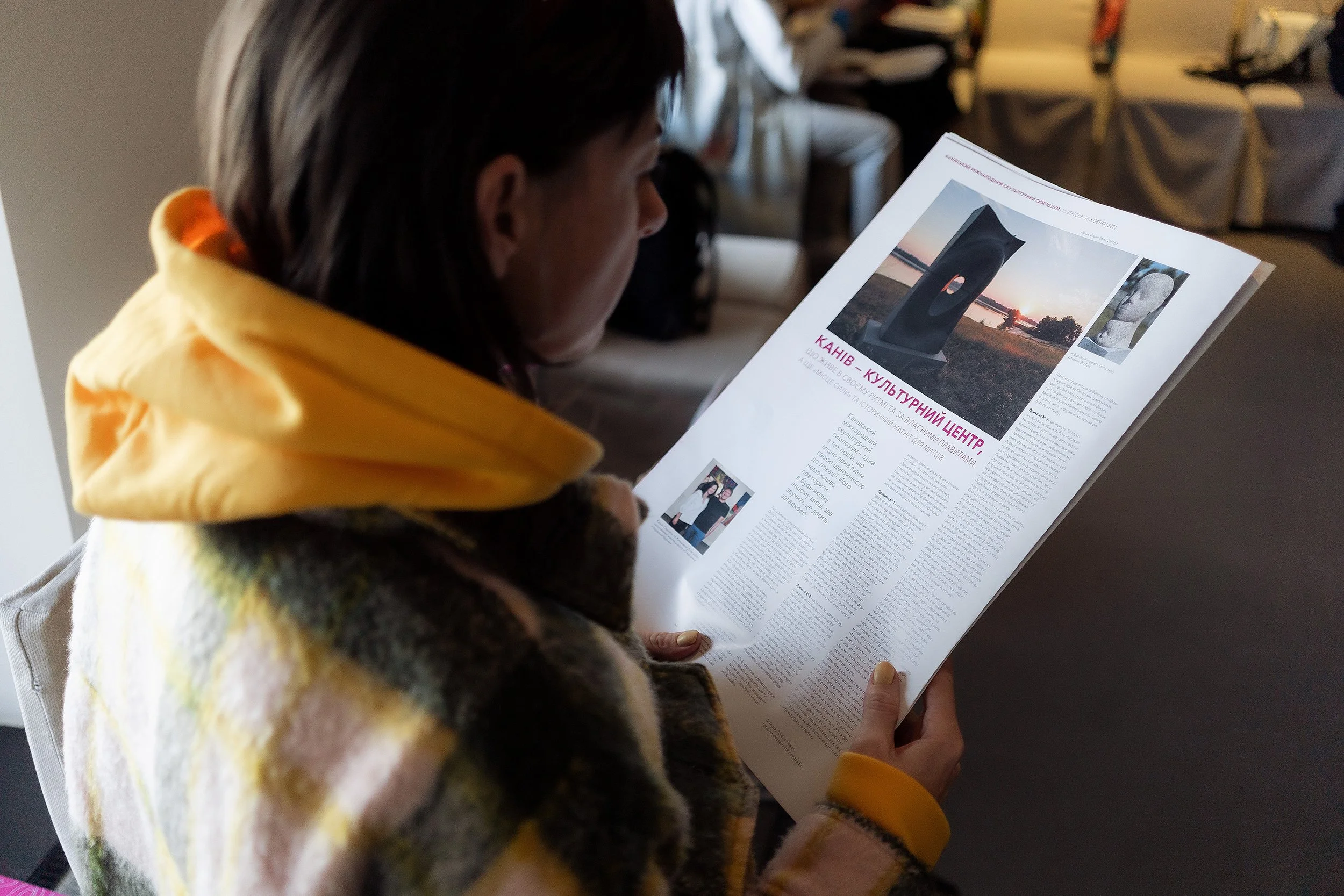
Natasha Nagayevska:Today, the metabolism of the artichoke is specifically regulated: on the one hand, it is able to swallow a lot of nutritional information and produce the necessary amount of energy for stable functioning, on the other hand, it does not know how to distribute and store this energy. This is all because art criticism (especially now and especially in Ukraine) is done by specialists of various disciplines. Personally, I got into it through art history (studied at the Faculty of Art History of the Jagiellonian University in Krakow) and curatorial practice, where I got into it through music practice. This interdisciplinary art camera of my experience in a peculiar way gives fresh air to the interpretations of artistic works, helps to go beyond the somewhat limited methods of research, expands their analytical spectrum, introducing new ways of communicating with art. If everything is more or less clear with the history of art, then music as the most abstract form of art gives unexpected effects. I have repeatedly noticed how a person who understands and knows how to practically realize musical quests, for example, Schnitke or Bartók, manages to feel more meaningfully, for example, abstract forms of sculptural experiments. Music explains in such a way as not to reproduce in the word, and what is not explained by the available metaphors, but what is palpable on a physical level and that in sculptural or any other form the artists try to reproduce. Musical literacy creates special emotional-verbal structures that help expand the spectrum of visual perception and understand the thinnest membranes of artistic matter. Sometimes my musical semantic searches interfere with me: I cannot, looking at the sculptural and spatial experiments of Lucho Fontana, not hear the violin breaks from Arvo Parta's “Tabula rasa”, I can not, considering the sculptural installation of Magdalena Abakanovich at the City Hall Museum of Modern Art in Hiroshima, do not hear the “Cry” of Krzysztof Penderecki. And after the residency for art critics within the framework of the Kaniv International Symposium, I can not touch the eyes of the works Oleksandra Diachenko, which are located on the territory of “Princely Mountain”, do not experience the smooth, pulling jazz ritardando.
Khrystyna Semerin: I think this role is colossal. For me, the competition was an opportunity for the first time to write purely about sculpture. It creates a demand and demand, without which it is almost unrealistic to expect that a whole branch of art criticism will emerge by itself. I was at the residence for the first time, because for a long time I could not afford to “fall out of the work schedule”. It is a good experience and a truly incredible place. Tranquility, nature and the Dnieper nearby, communication, sculpture and sculptors around, a unique space where the memory of Shevchenko and Kaniv intersects and coexists with contemporary art, this is a constant contact with the curator of the competition Kateryna Pidhaina, who manages to help with everything; this is the solution of everyday issues without you (such as “when and what to cook for lunch?”), comfort, which created not only a “special atmosphere”, but real conditions for work. The head is rebooted, a bunch of ideas are born in communication, and there is time to work everything out alone in peace. I will summarize from my own experience: without a competition, a person may not reveal his talent in art criticism, and without a residence it is difficult to find a place in the schedule, time and resources for the development of his own work, especially at the beginning of the path. So these opportunities are extremely valuable.
Natalia Mandra: I was impressed by this year's format of the residence for art critics on the basis of a sculptural symposium, first of all, by its very existence. I have no analogues in Ukraine. The closest, it seems to me, is a contemporary art symposium on the island of Birychiy, which published its print edition “Birychi”, but the invited authors then worked rather as journalists. The residence for art critics in Kaniv is perhaps more aimed at certain worldview transformations, at a partial reformulation of views. At least, my views have adjusted somewhat, both as a result of observations of the many technical points that condition the sculptor's work with stone, and as a result of stories from professional life heard firsthand. The immersion in the concentrated artistic environment that is the symposium is extremely nourishing intellectually and emotionally, and thanks to the diverse sculpture park, this stay also provides an intense sensory experience.
Natasha Nagayevska:This residency for art critics within the framework of the symposium was my first experience with a similar format. Here, in Kaniv, after coffee conversations, the words themselves were composed into metaphorical palimpsests, the leitmotif of which was the screams of Bulgarians on granite. Such joint residences of artists and art critics harmoniously complement each other. On the one hand, you can explore the “mystery” of the artistic process and reflect it in the word, on the other hand, there is a certain group of people who may be interested in these reflections (which is a lot of encouragement, probably not just me). Communicating with the sculptors, Ekaterina Pidhaina and the participants of the residence for art critics, I was once again convinced of how many unexplored and transcendent topics await their authors.
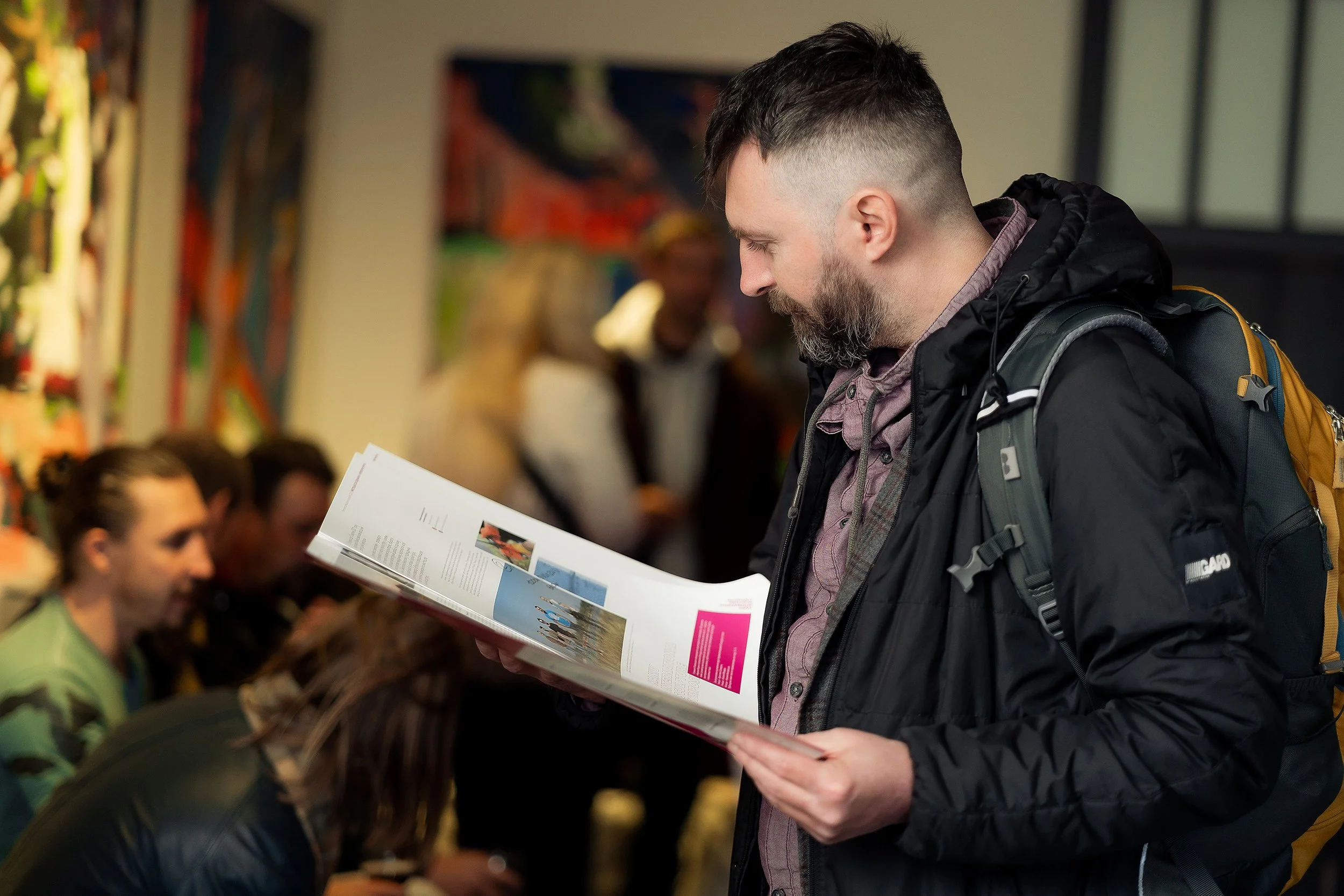
Khrystyna Semerin: As you know, what the media does not write about does not exist. In a broad sense, media is not only the media, but also everything that mediates and transmits information. We are not only researchers, but also mediums, so we know this cuisine. Of course, without media interested in art criticism, it is difficult to talk about it not as development, but existence. Media is not just a public platform, although it is extremely important. It is also a community, an audiatorium that is formed and developed together with texts and topics discussed, new authors and authors who can pull themselves up to a given level, and then move higher. All of it creates a cohesive and healthy ecosystem that works for the future. Therefore, I liked the idea of a separate media on the site “RedBlack”. This is urgent for the development of Ukrainian art criticism and, in particular, criticism of sculpture, which, according to the general opinion, is lacking in the Ukrainian space. I hope to get involved with the texts.
Natalia Mandra: Media is important for art criticism, and funding is important for media. Financing is a key aspect, because if you have it on a stable basis, you can start your media and build it with the materials you consider necessary, because media that professionally (and at least not in the “lifestyle” category) write about contemporary art in Ukraine are so few that you get lost in them the background is simply impossible. I share the opinion of Oleksandr Diachenko, who believes that collectors should be the most interested in the development of art criticism (in particular through media financing). Because when art is reflected, it becomes more visible to a wide audience (not only within the country, but also at the level of national art and its visibility to the world too). Art criticism is a tool for reflection, and it is not so important which basket to put such a tool in — whether it is online media or whether it is an institutional research platform like the PinchukArtCentre (although, of course, you should not put all art criticism in one basket). The problem is that the existing media either have a very small budget for materials about art (which accordingly means a low fee), or generally practice a strange policy of not paying a fee at all. In such a situation, reflection on art acquires the status of a hobby, leisure. Mostly in this state art criticism now exists — authors who have professional training and interest in this business earn money from something else, and once or twice a year in their leisure write an article about an exhibition or other art event of particular interest to them. So you will be happy to hear that “art criticism in Ukraine practically does not exist”, but here are the reasons why it does not exist. No funding — no art criticism. Nothing unexpected.
Natasha Nagayevska:Since art criticism in Ukraine is in the formative stage, the media is more important than ever. They help to fill the missing but vital link of the uncertain Ukrainian art system with professionally collected texts. The main task of the media today is to create adequate conditions for the activities of art critics. Editors often complain about the meager amount of good texts. The problem is often that the really good materials remain ignored by the editorial team itself, poked at the margins, grinded by censorship. Issues of taste and engagement will continue to rent media spatial platforms. Therefore, when open competitions for authors who professionally explore art (such as this year's Kanevsky sculpture symposium) grow in the field of vision, it is impossible not to give your text the opportunity to go all the way out of the list “for the future”.


.svg)