
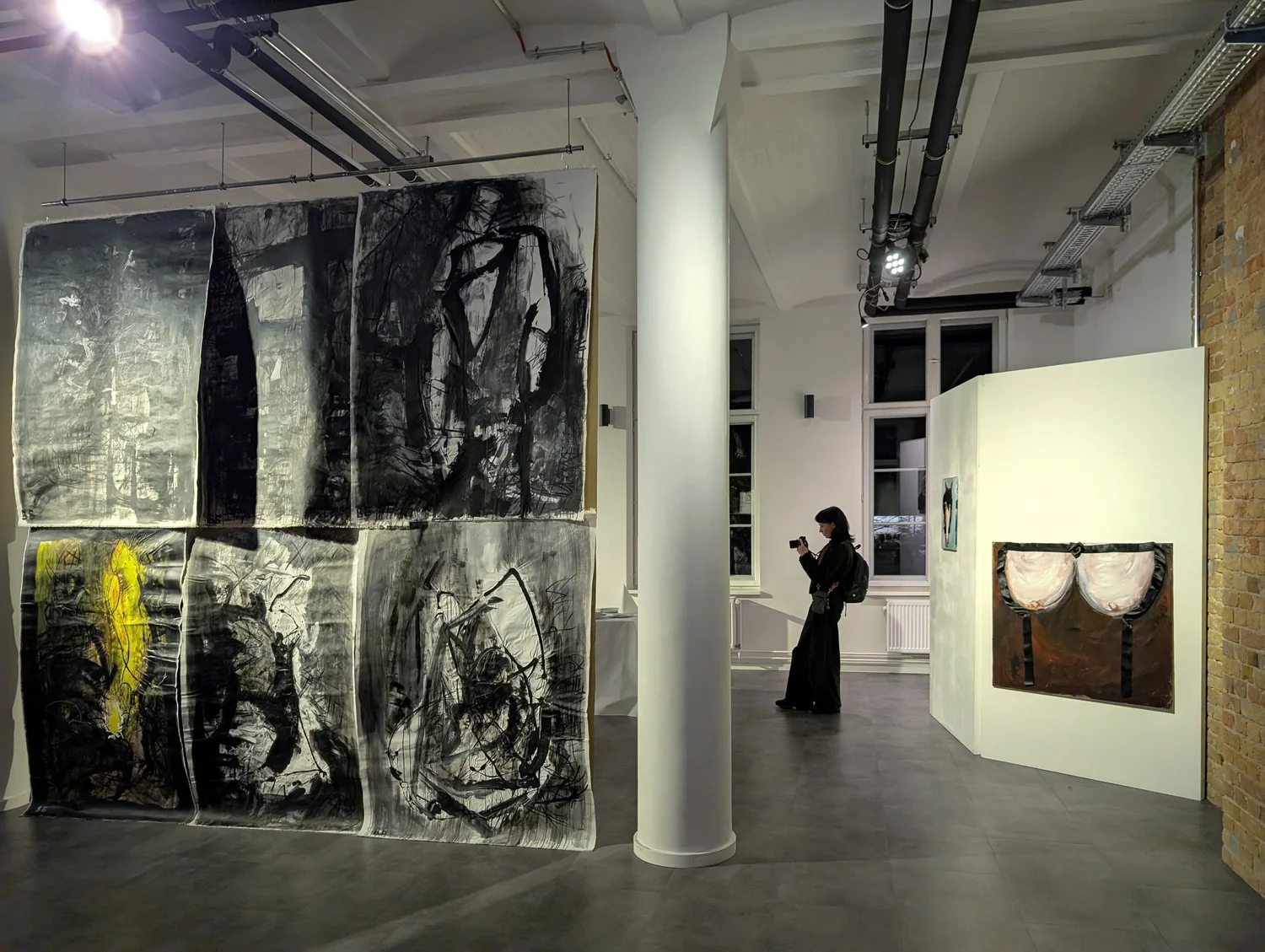
In this project, curator Vlada Ralko explores the concept of ‘vision’ and human responsibility in the face of socio-cultural catastrophes. “Selected statements by artists, made not only during periods of wars near and far, cold and hot, but also where ethics, politics and culture are the only possible ground for the emergence of human vision. In essence, human existence is held together by the retina, a fragile coordinate grid that needs to be renewed again and again,” writes Vlada in the exhibition concept.
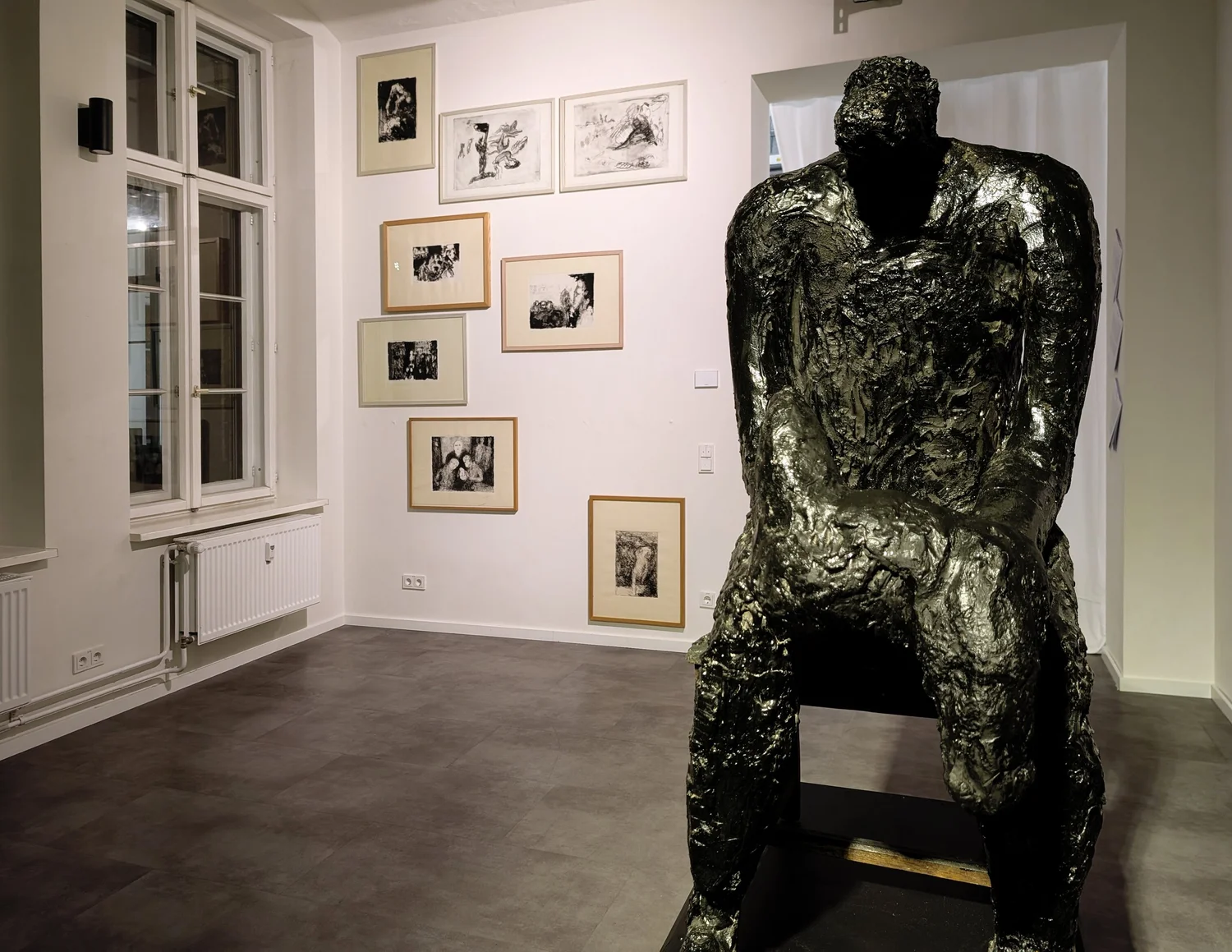
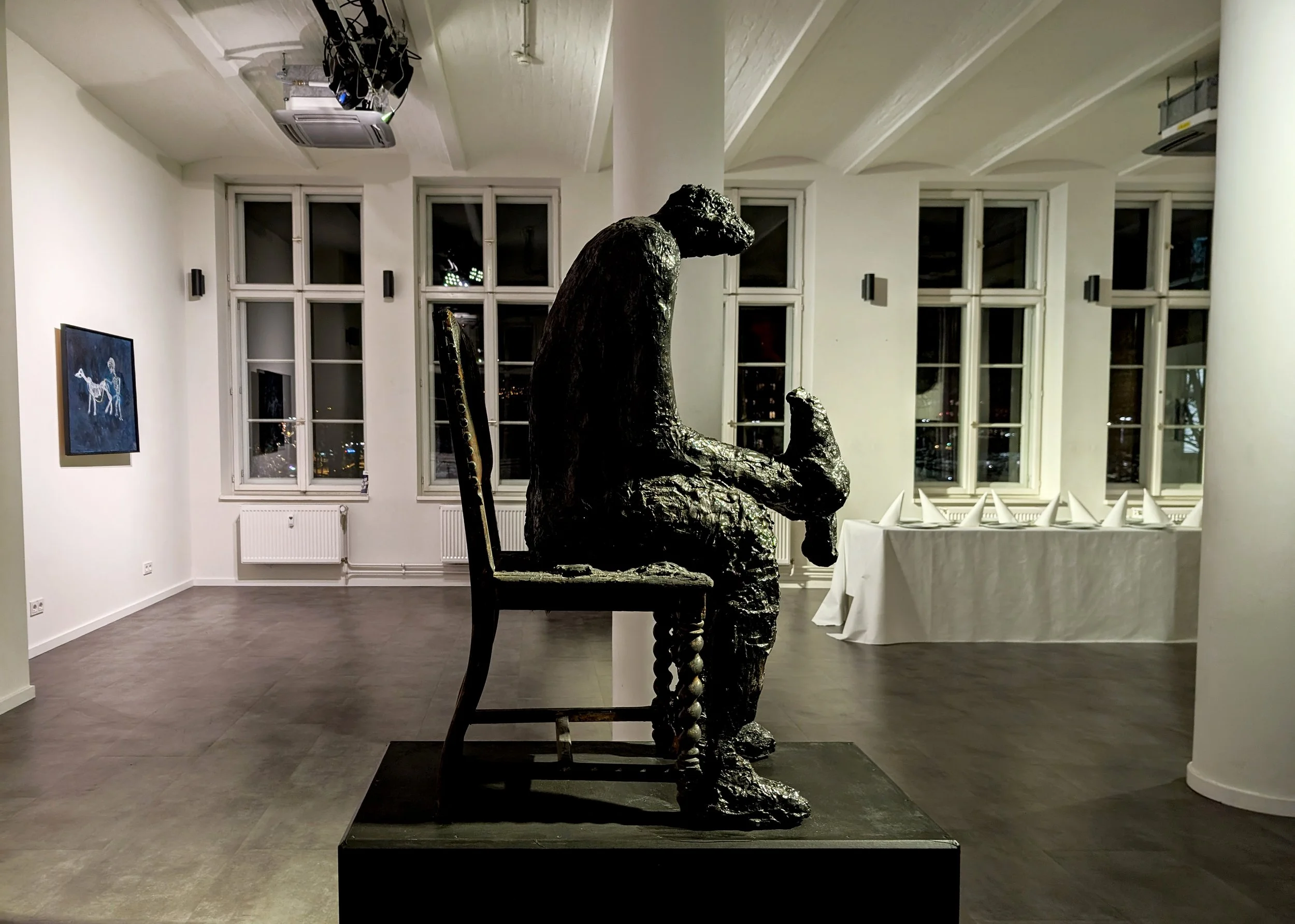
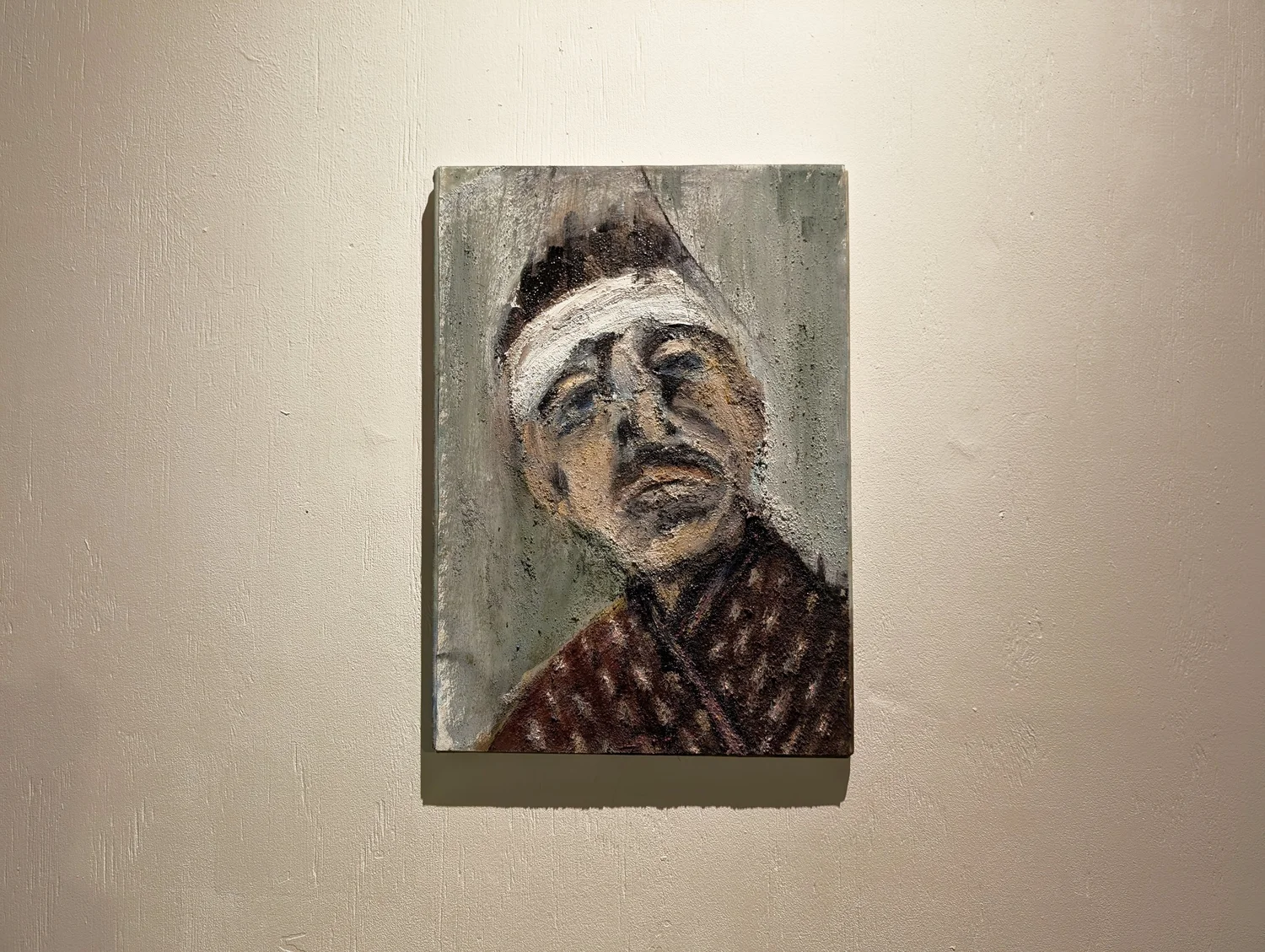
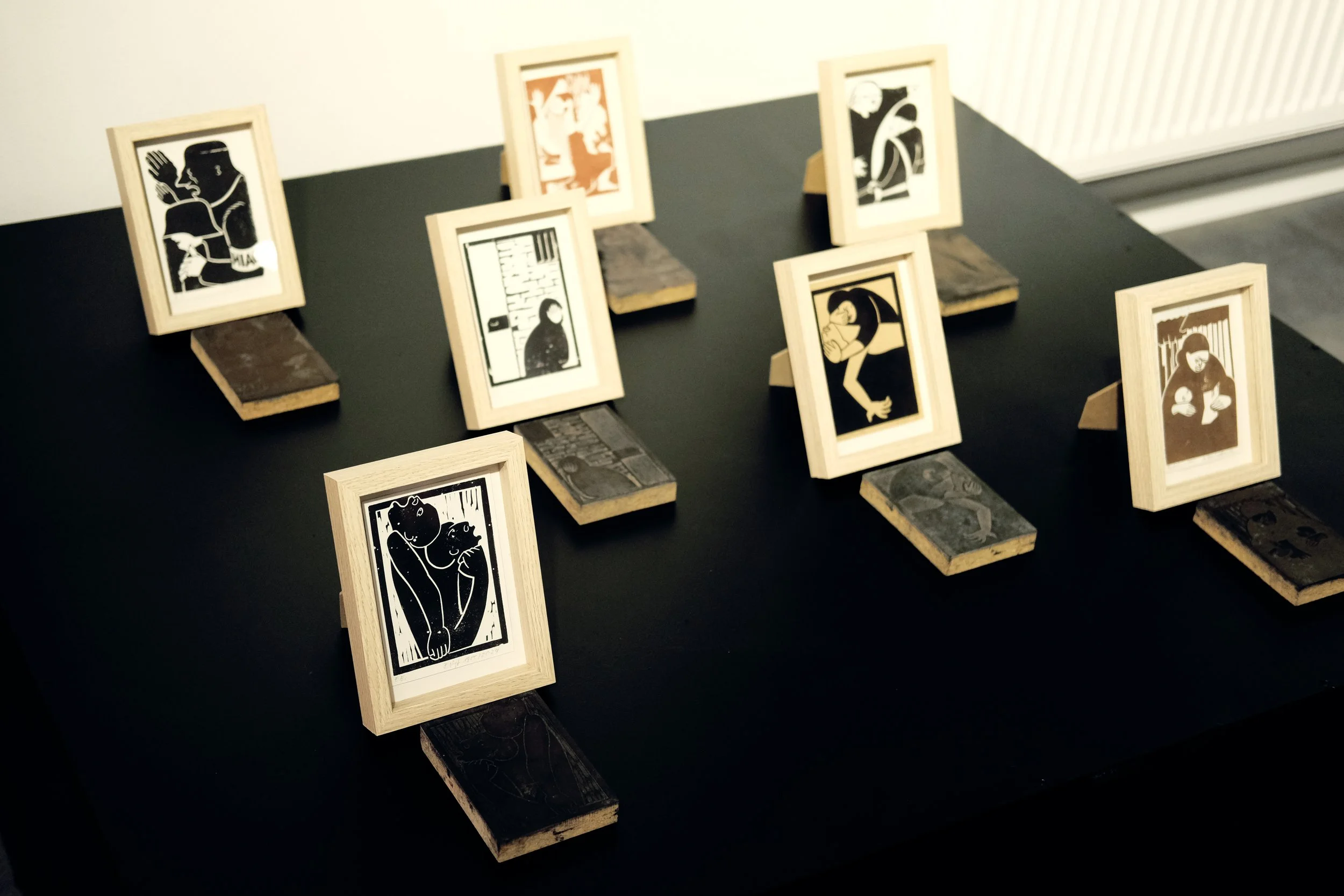
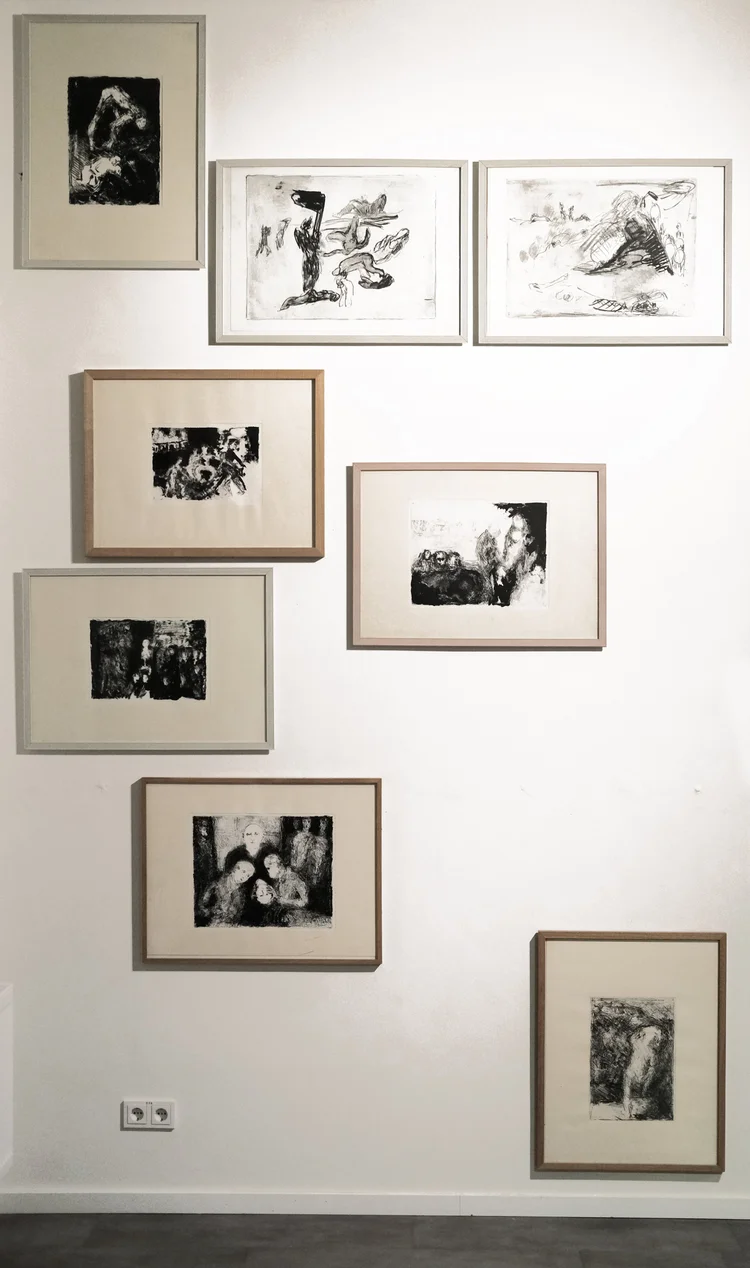
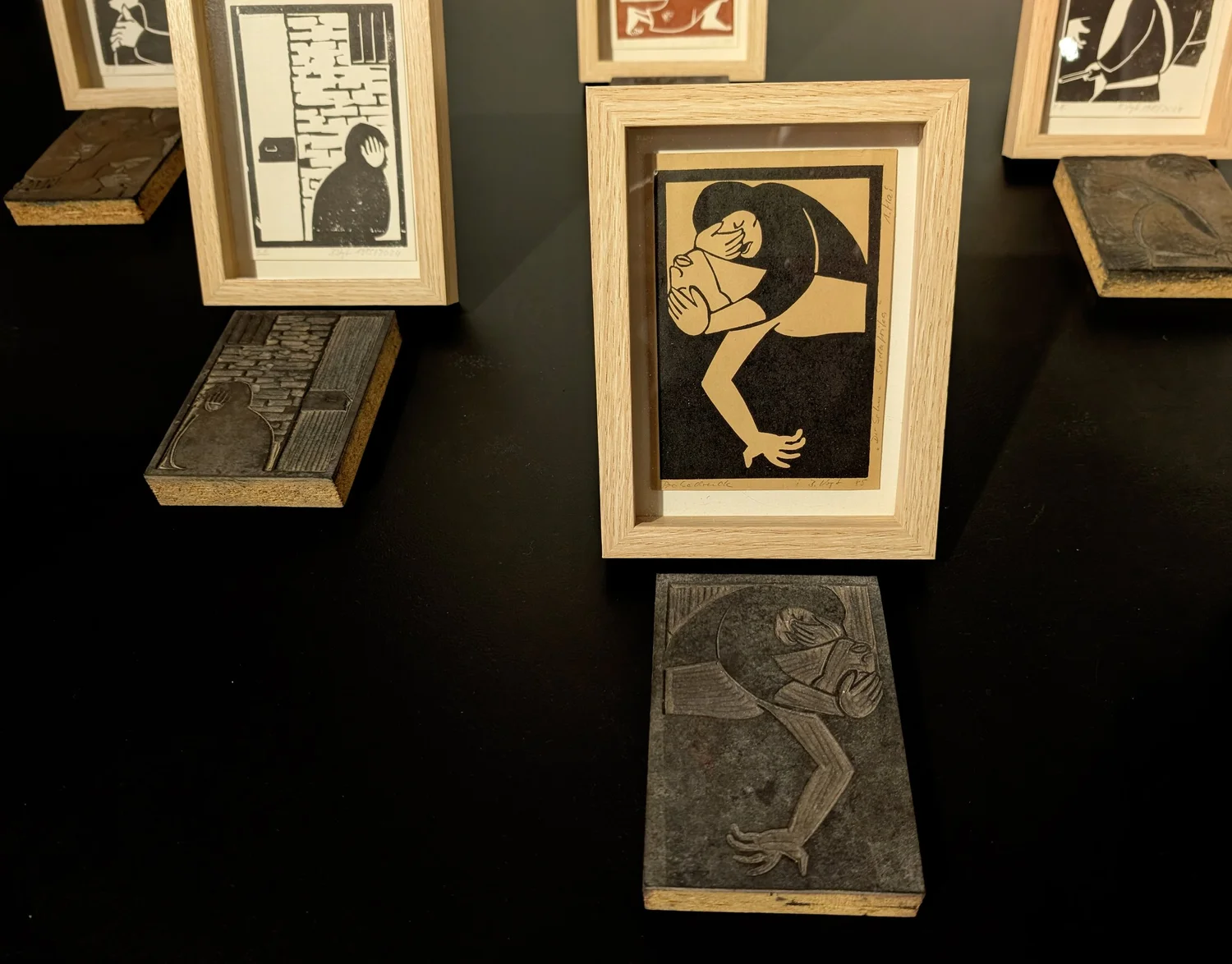
The exhibition features works by Volodymyr Budnikov, Yuriy Leiderman, Vlada Ralko, Dieter Ruckhaberle and Bernhard Vogt. The executive curators were Tetiana Stas and Valeria Plekhotko. According to the curator, the earliest works in the exhibition ‘The Face of the Eye’ are two lithographs by Dieter Ruckhaberle from 1958, from the ‘pre-wall’ period. The most recent are works by Yuri Leiderman and a series by Vladimir Budnikov from 2024. Bernhard Vogt’s linocuts were created in the 1980s, when the final sections of the Wall were being completed. This is how Vlada Ralko describes Dieter Ruckhaberle and the presence of his works in the exhibition: “Dieter Ruckhaberle is a Berlin artist, a classic, an activist and a curator. His black ‘tar’ sculpture became the key and the starting point for reflections on a possible exhibition. But in 2022, I did not yet know that he would ultimately be presented in precisely this way, across multiple time periods, with his lithographs created ‘before the Wall’ and his almost final paintings from 2016 – a year of war in Ukraine.”
There is plenty to read about Rukhaberle online, including extensive interviews with him, so I won’t go into the facts, as he was a well-known figure and the long-standing director of the Berlin Kunsthalle. Instead, I want to highlight the boundary upon which his early and late works are built – a balancing act on the edge, where life and death are still, or no longer, inseparable. In the lithographs, there is a hint of Rembrandt, where light defines the subject. But there is also Kafka, and Goya, and Bruno Schulz, and Myroslav Yagoda.
Reviews and reviews:
Article by Konstantin Doroshenko
LB
.webp)



.svg)